

I Hiked Alone Often
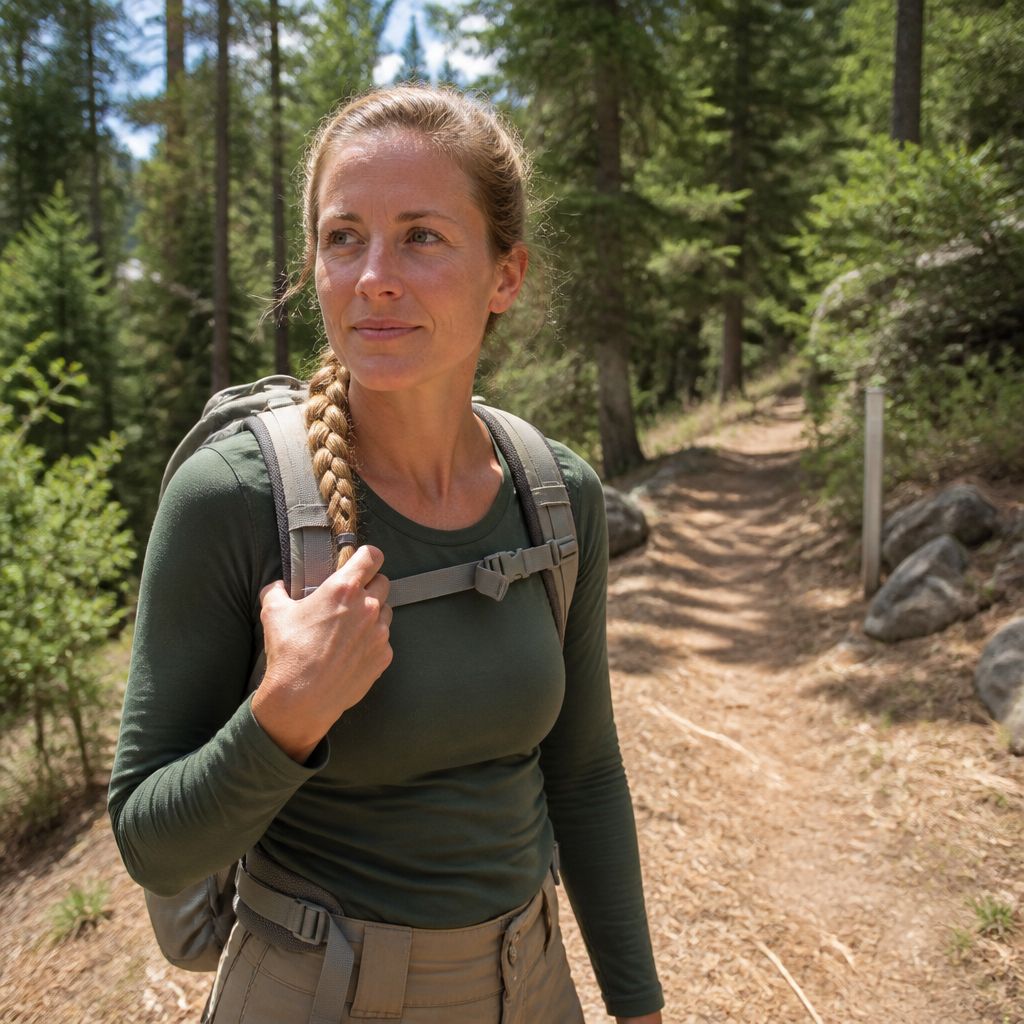
I had been the kind of person who chose trailheads on weekday mornings and came home for lunch, the way a clock pulls you. I liked quiet routes and small risks I could manage, the sort of confidence that comes from counting miles and practice. My friends joked that I was organized in a way that kept me calm.
On those weekends I moved with my body the way I moved through work: methodical, aware, measured. I read trail reports, checked weather, and kept my pack light so nothing slung or shifted when I needed balance. Once I was out there I trusted the muscles I’d strengthened treating other people all week.
The trail smelled like sun-warmed pine and old dust. I thought about routes I knew I could turn back on if something felt wrong, and I thought about how often the wrong thing was simply something I hadn’t noticed yet.
No Map, Only Promise
I picked a route I’d found on a forum off US-180, an unofficial nine-mile out-and-back that people described as quiet and rewarding. I told one friend I’d be back by dinner and watched her reply with a thumbs-up emoji; it felt enough at the time. I did not print a map or mark a waypoint because I’d hiked enough to rely on memory and instincts.
My planning was lean: water, light, and a timeline that assumed nothing dramatic would happen. I told myself that the trail would be a simple loop to stretch my legs and clear my head, not a place to test the limits of preparation. I liked the way the plan fit in my pocket like a promise I could fold away.
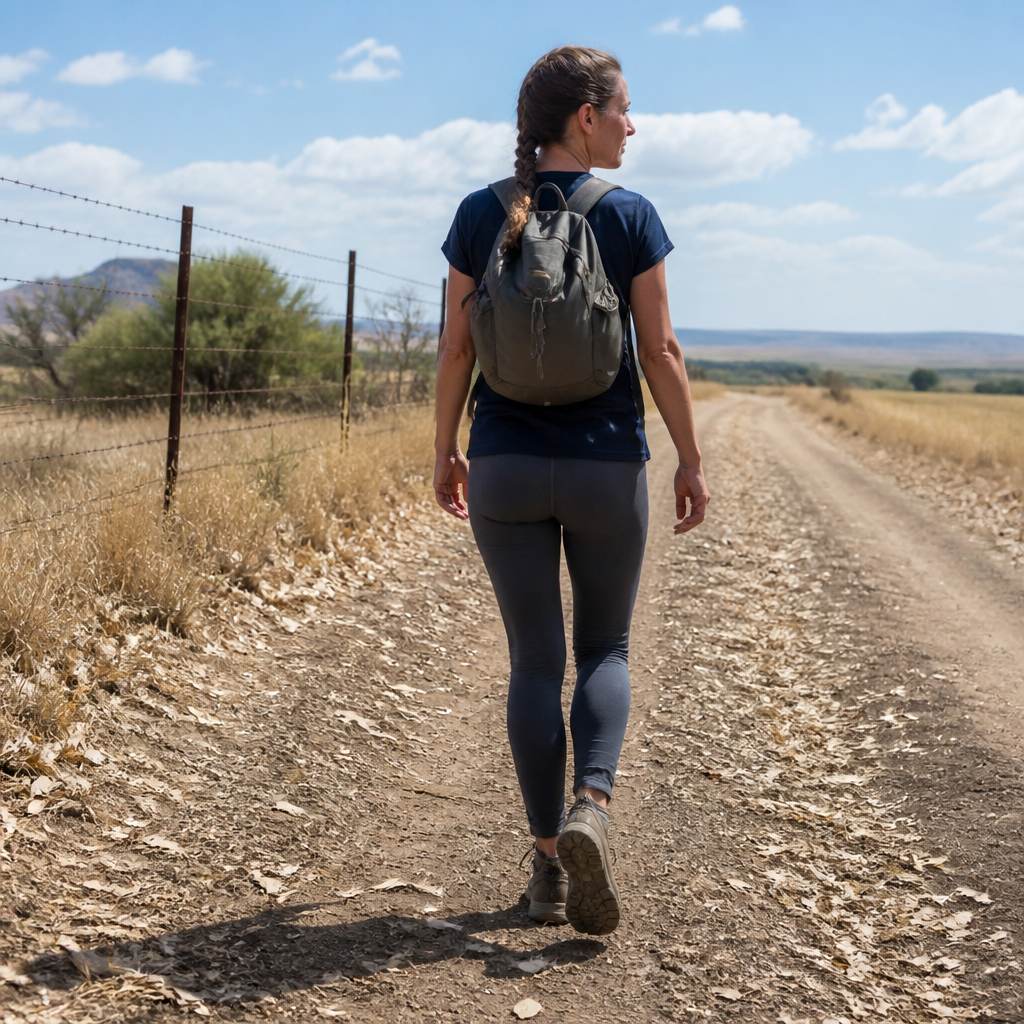
The sun warmed my forearms as I tightened my pack straps. I walked past a rusted fence and headed down the two-track toward cottonwood shaded by wind, thinking I’d be back at dinner.
A Pack With Bare Essentials
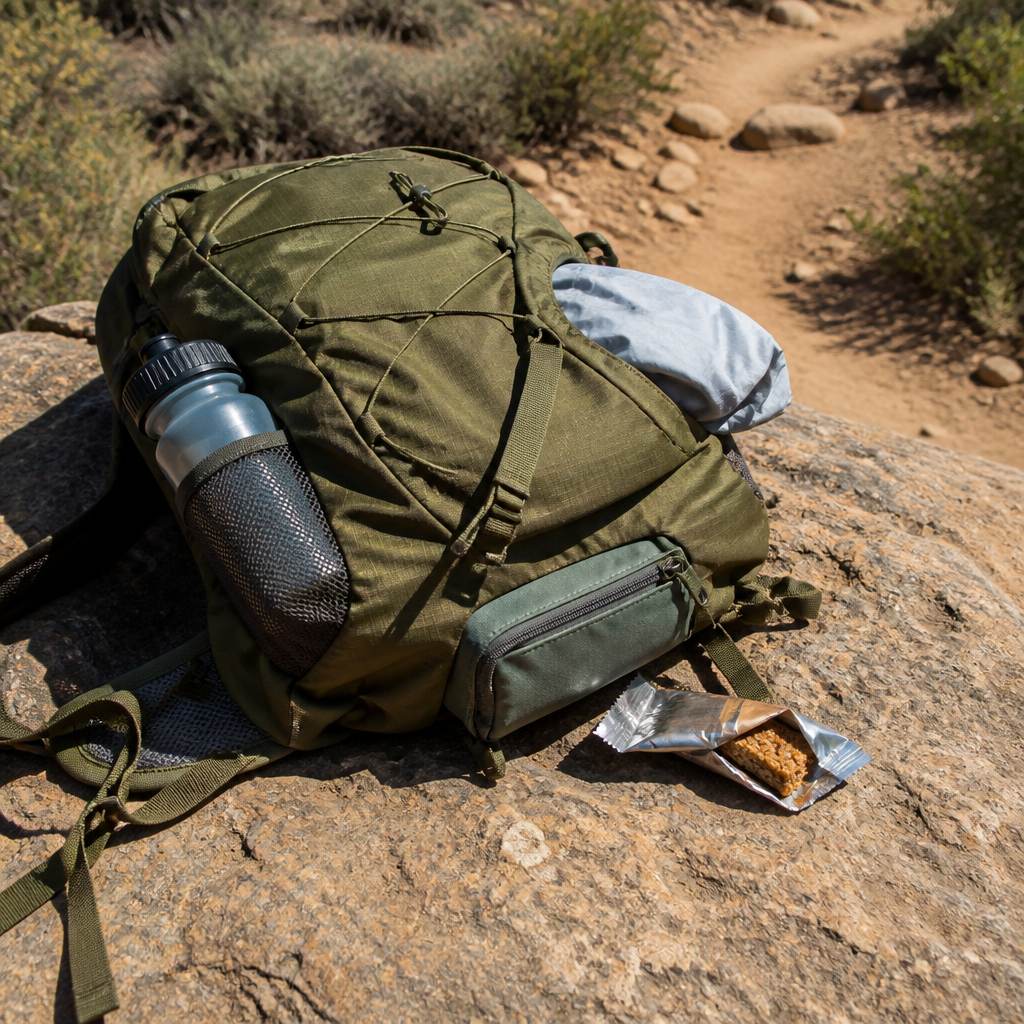
My daypack was deliberately light: one liter of water, a filter, a headlamp, a wind shell, a lighter, one protein bar, and my phone. I could carry everything I needed and feel agile on rough sections, which was part of why I didn’t bring extra communication gear. The idea of a satellite messenger felt like overkill — one more thing to learn to use.
I checked the water and slid the filter back into its pocket, feeling the weight settle against my lower back. The pack moved with me the way a practiced load should, low and snug, so I trusted it and kept walking. I told myself I could problem-solve from the trail if needed.
When I tightened the sternum strap the small mesh pocket bounced against my chest and the protein bar crinkled softly. I kept moving down the track without a map tucked into my plan.
The Slab Sheared Under Me
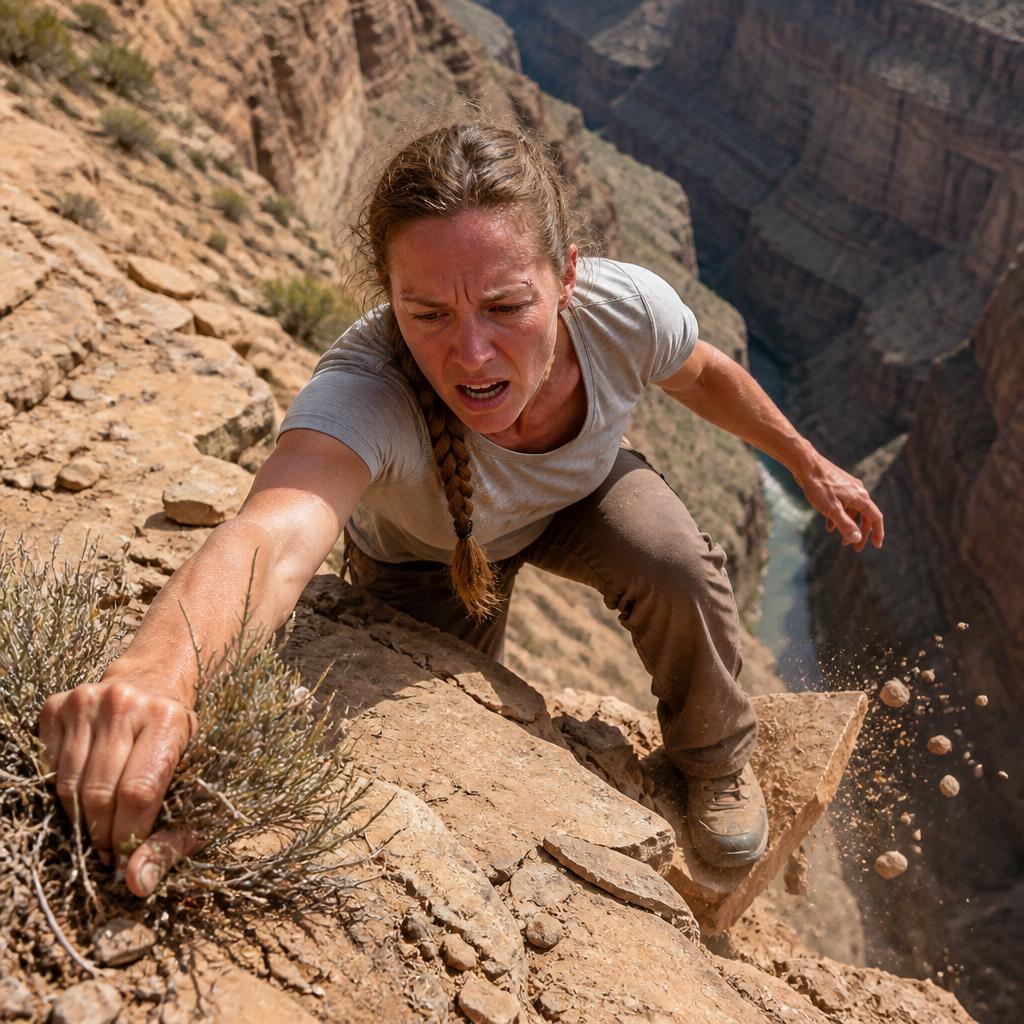
I stepped forward onto what looked like solid rock at the lip of a narrow canyon and felt the slab give beneath my boot. The stone had a thin edge, and it slid away in a cold instant; my front foot dropped and my hands shot for anything that would stop me. The world went loud with the scrape of grit across my palms when I grabbed at the brush.
I tried to twist and catch myself, but momentum kept pulling me over the edge. I remember the sound — small rocks chattering down into the canyon like distant rain — and the immediate rush of cold air down the crag. I clutched at a low bush and then the ground shifted again beneath me.
For a second I thought I would stop by some miracle, and then I hit hard and everything folded into one sharp instant of pain and the knowledge that my leg had taken a bad angle.
I Heard My Boot Snap
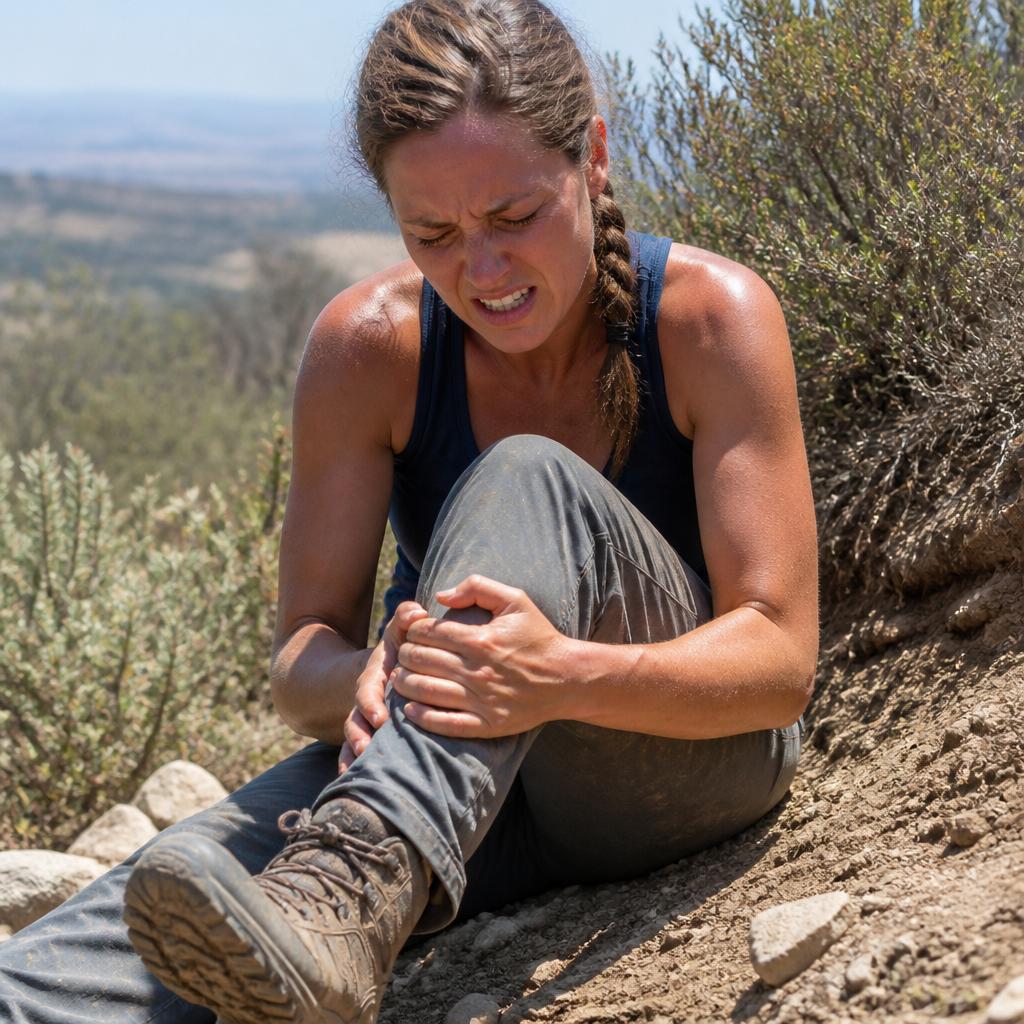
I slid, then grabbed brush and tried to roll, and then I hit so hard I felt my right leg bend wrong beneath me. There was a clean, terrible snap in the boot that landed like a punctured bell in my ear, and pain came flooding through in a single, hot ribbon. I curled around that pain and tried to move my toes and then didn’t want to.
The world around me smelled faintly of crushed sage where my hand had landed, and I kept testing weight as if denial could change the physics. The knee wouldn’t take any pressure; swelling began almost immediately, a tautness that made the fabric of my sock feel tight and foreign. I knew from treating knees how a joint behaved when something was truly broken, and this felt like that.
I lay there counting breaths and thinking about whether I could crawl to safer ground, and the only thing I could feel with any clarity was the intensity of the pain when I even thought about moving my foot.
I Couldn’t Stand Up
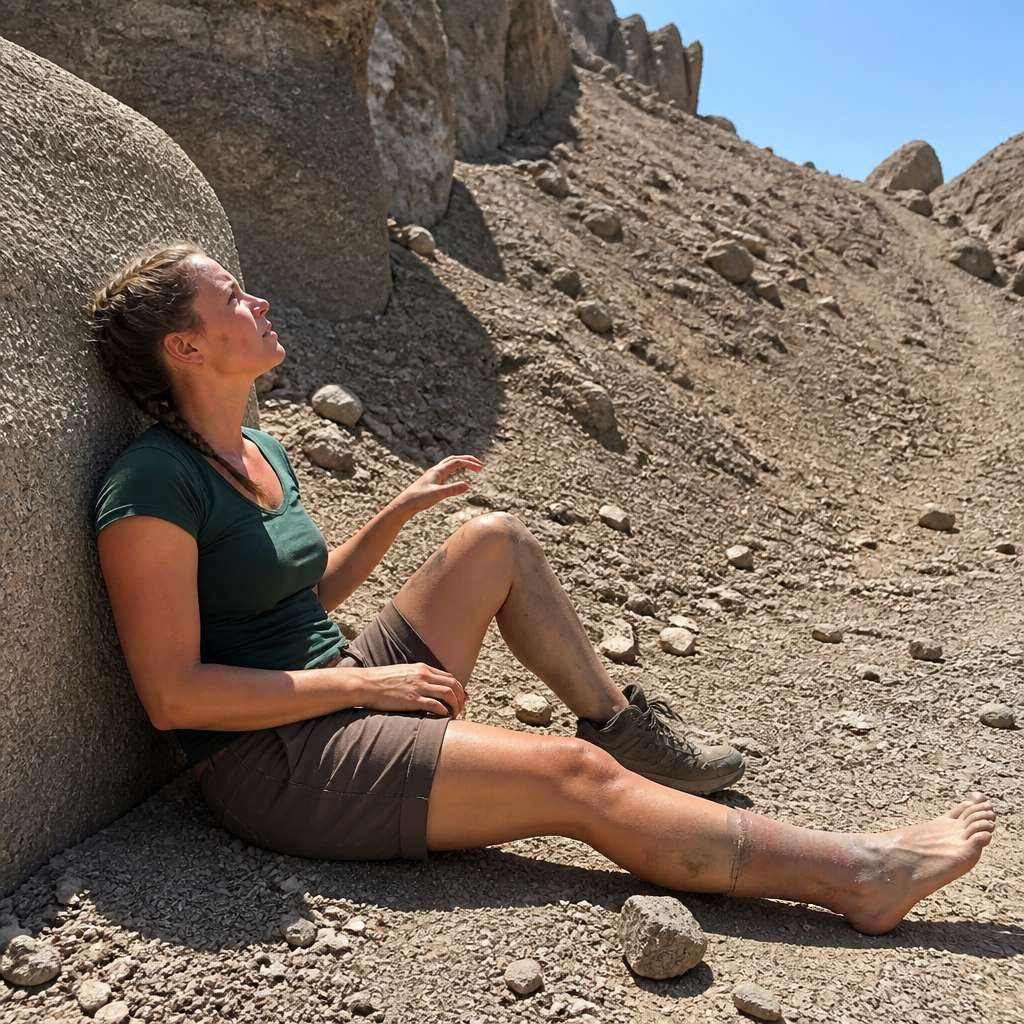
I tried to put weight on it and the knee folded the way a door would if the hinge were gone; I went down hard and couldn’t get up. Swelling bloomed fast, and the joint felt unstable like a loose mount. The slope around me was steep and the soil underfoot was a mix of dust and loose scree that crumbled when I tried to push.
The canyon walls rose on either side, tight and steep, and there was no safe scramble up a ledge; every attempted foothold slid or powdered. I tested the idea of moving by sliding my torso forward and feeling the slide of rock dust under my palms. I realized the terrain made climbing back up impossible without a secure stance I didn’t have.
I thought about the hours it would take anyone to spot me down here and about the fact that I simply couldn’t stand, let alone climb, and the decision narrowed into two bad choices.
Wind Swallowed My Shouts
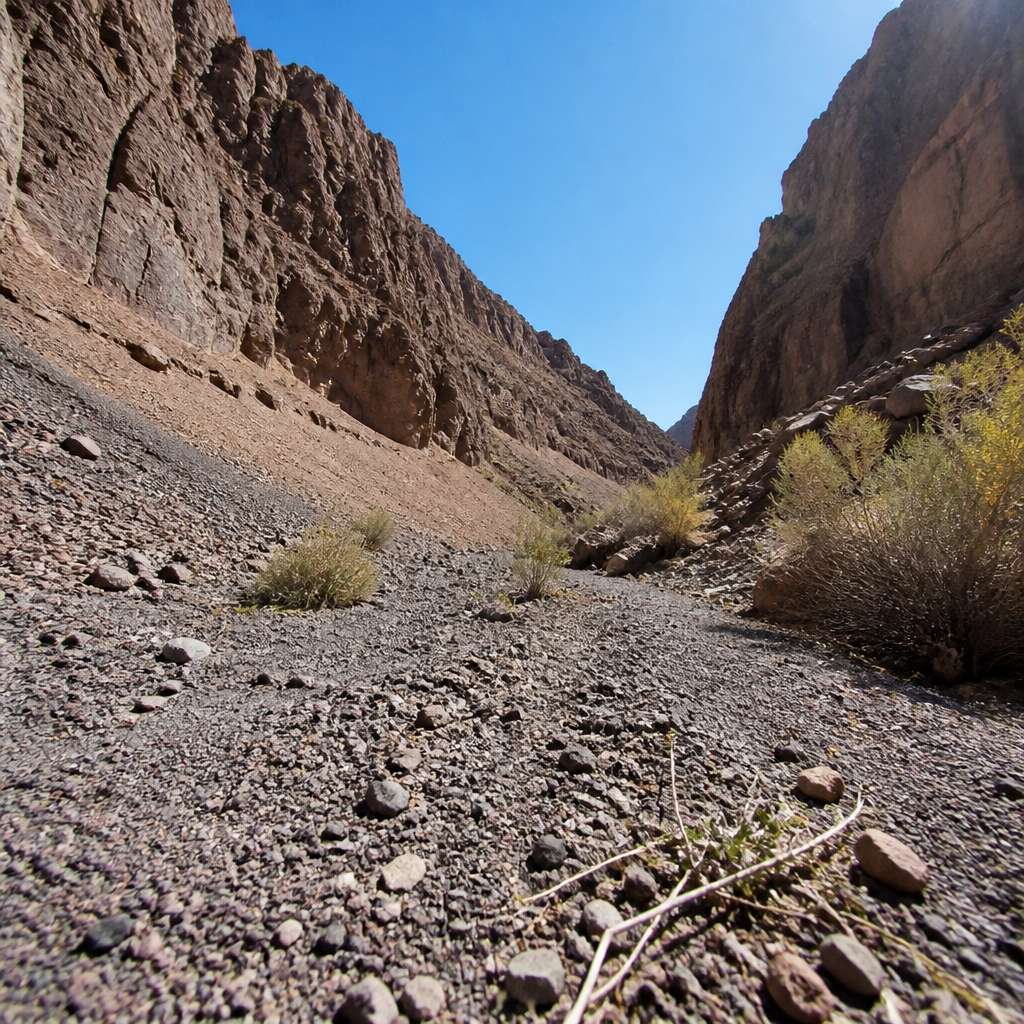
I screamed until my throat burned, short bursts that came out raw and thin, and there was nothing back but wind and the small echo of falling stones. I thought I’d hear a voice, a distant engine, anything that would tell me I wasn’t entirely alone, but the canyon kept everything to itself. The emptiness felt absolute in a way I hadn’t expected.
The sound of my own breathing loomed large; every inhale scraped like a rag. I realized quickly that I was shouting at rock, not people, and the more I called the more ridiculous the idea of rescue sounded. After a while my voice reduced to hoarse little tries and then silence because the air simply took the sound away.
The canyon answered only with distant stones and the impression that any call I made would not travel far enough to be heard by anyone who might be passing, which left me listening for other options.
Stay Or Move
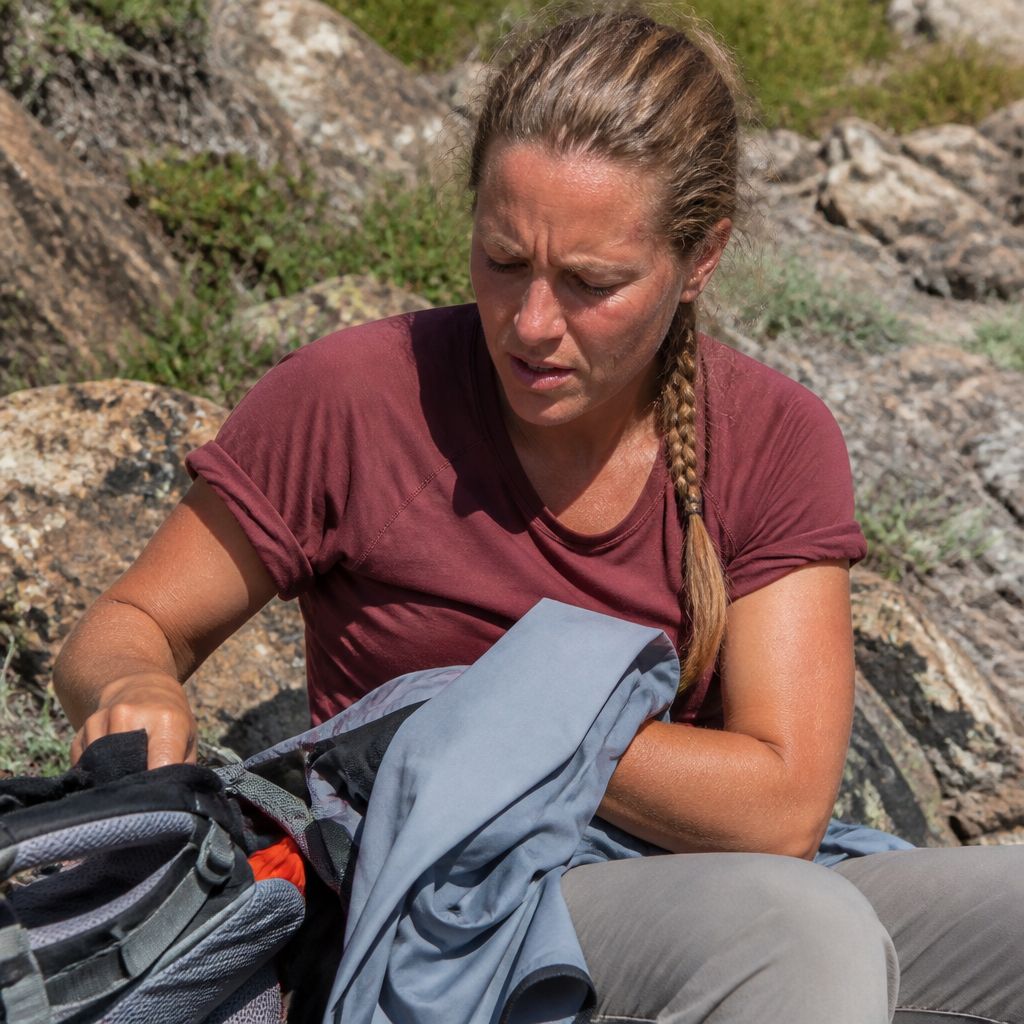
I had to make the first ugly choice: stay put and hope someone found me, or try to move knowing a cold night might kill me if I got stranded exposed. I ran through the options the way I used to run through a patient’s rehab plan, except none of those plans included a broken leg in a canyon with no cell signal. The rational part of me wanted to stay where I was visible from above; the other part wanted to be on a route and moving.
My decision-making felt mechanical, and I cataloged resources like an inventory: water, filter, my wind shell, and a protein bar. I thought about the timeline — how fast the sun would slip lower and how the temperature would fall. I could imagine the cold settling and how it would steal strength in a few hours if I stayed exposed.
The fingers of worry tightened when I pictured night descending and the small, crucial question of whether I could even drag myself to a more sheltered spot without doing more damage kept circling in my head.
I Turned My Phone Off
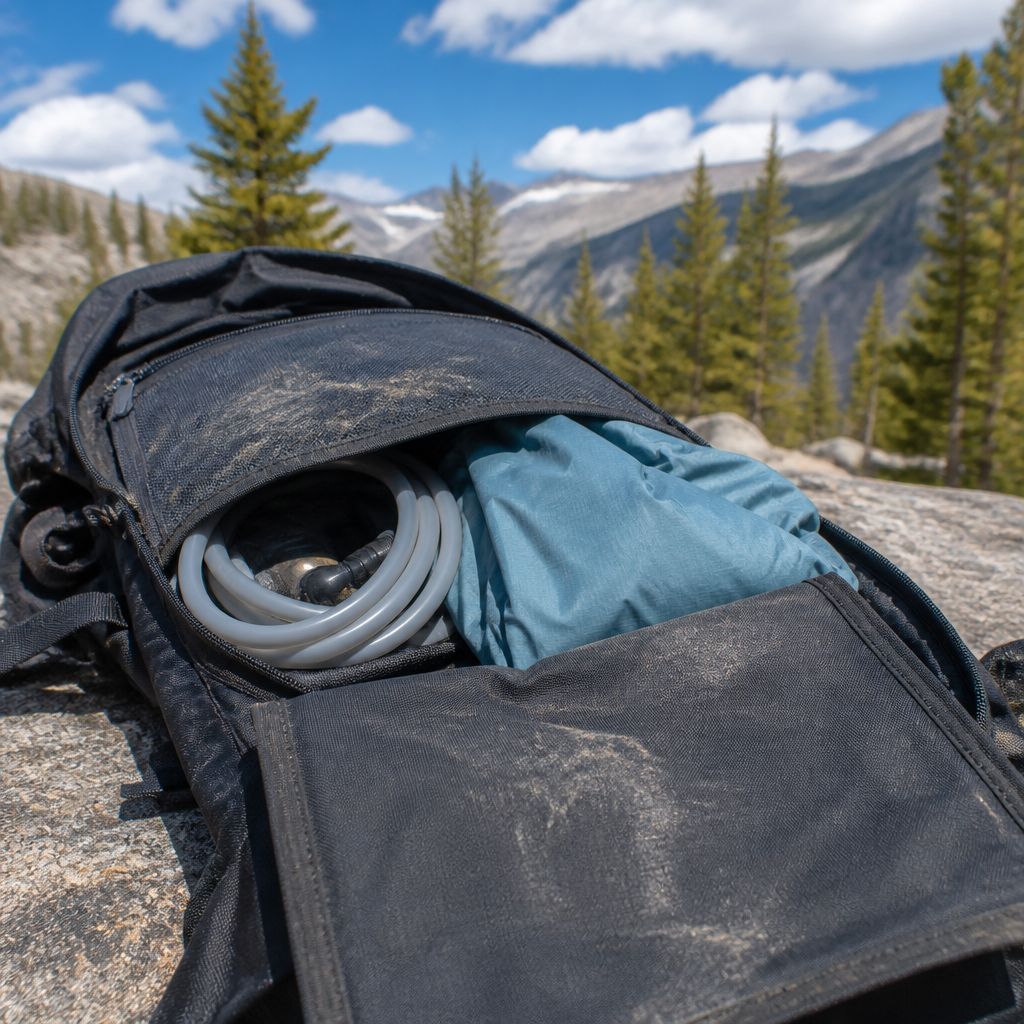
I checked my phone because it was the instinct I still had left: one bar then none and no GPS lock, battery at sixty-two percent. The idea of leaving it on and letting it drain felt like throwing away a potential lifeline later, so I put it in airplane mode to save the last of the charge. It felt selfish and sensible at once, a tiny control in a situation that otherwise had none.
I told myself I’d turn it back on if I heard a car or saw a hiker, and I slid it into the inner pocket of my pack where it lay quiet and unused. Not seeing the screen and not letting the glow reach me erased a small anchor to the civilized world. The decision made the canyon feel even more absolute because I had voluntarily cut the one link I might have had.
The phone was cool in my palm before I turned it off, and when I slid it away the silence felt heavier because there was nothing left to hope for except whatever I could do with my hands and the things I carried.
Night One Was Long
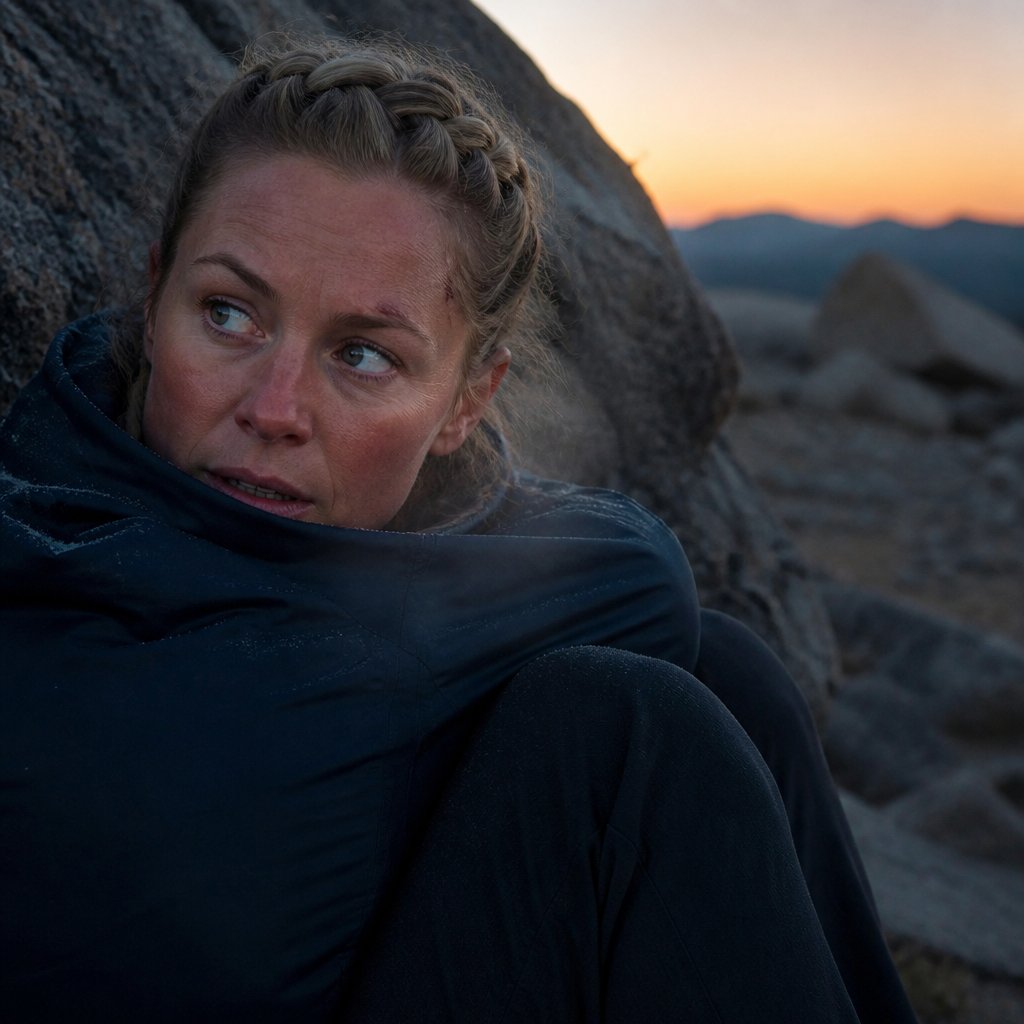
Night one was an exercise in staying warm and not letting panic climb inside me: I wedged my injured leg between two rocks so it wouldn’t twist and shivered until my teeth clicked. I wrapped my wind shell around my shoulders and pulled it tight to trap whatever scraps of heat I could, checking the horizon every so often for any movement. The cold came in slow, patient waves that tested every plan I’d had for how to survive a night outdoors.
I focused on tiny tasks to keep from thinking too big: knotting my shoelace differently so the shoe wouldn’t slip, flattening a little patch of scree to make a pseudo-seat. My forehead felt slick from effort, and with each breath the cold burned across my lips. I rationed my water and the protein bar into small, deliberate bites because eating felt like a promise of morning.
The temperature dropped in a way that made my teeth chatter and the darkness seemed to press closer, and I lay alert to every sound because I didn’t trust the canyon to guard me through the night.
Mossy Seep At Dawn
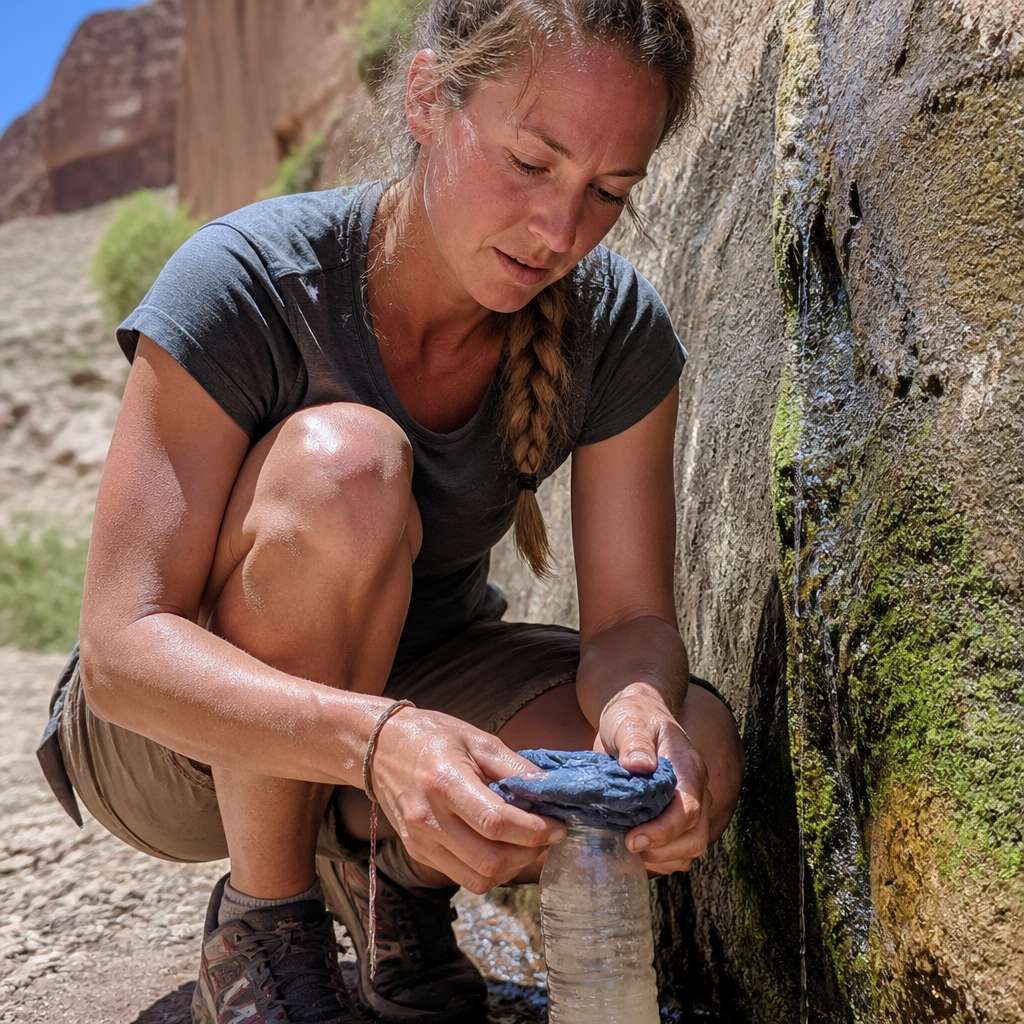
I woke with the canyon throat open and empty and crawled toward the green smudge I remembered from the night. The seep was a thin trickle behind a mossy lip, nothing like a stream, but it moved and I wanted it. I filtered it with shaking hands, running it through my bandana into my bottle because it was the only water I had that morning.
The seep left a bitter, metallic tang at the back of my throat that told me it wasn’t clean, but I drank small mouthfuls until my stomach quieted. I used the sleeve of my shirt to steady the filter and felt the fabric scrape my scar on its way past my eyebrow. I planned routes in my head while my hands trembled.
I sat on a flat rock and tried to judge how long the trickle would last, counting heartbeats and imagining the sound of trees or road to the north, and I kept thinking about whether the water would be enough to get me moving again or only buy me more time to fail.
Crawling Like Falling
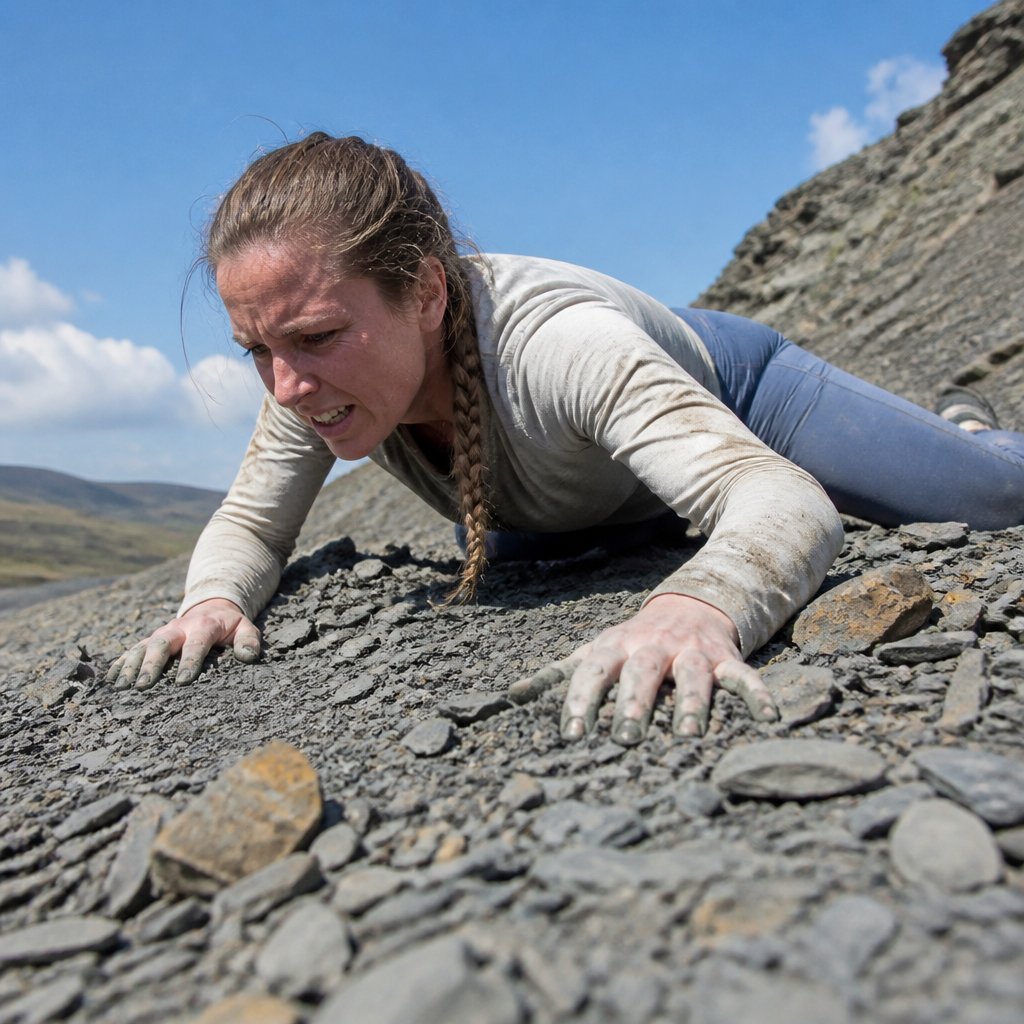
I started crawling because standing was a question I couldn’t answer. My forearms ground over grit and small stones while my hips dragged, and every bump under my right leg detonated bright, white flashes behind my eyes that made me stop and breathe. I counted movements instead of thinking about the distance.
The hot scrape of gravel on my palms kept my focus on mechanics: push left, rotate torso, slide the bad leg forward one inch. I used the rim of my pack as a brace and felt the sack dig into my ribs with every pull. I said the instructions out loud like a script so my brain would obey.
I made a patch of slow progress and then paused to listen for the canyon’s hold on me, wondering if sound would ever replace the pain as my compass, and I didn’t know whether the next handful of inches would bring me to safety or make the hurt worse.
Midday Inches Forward
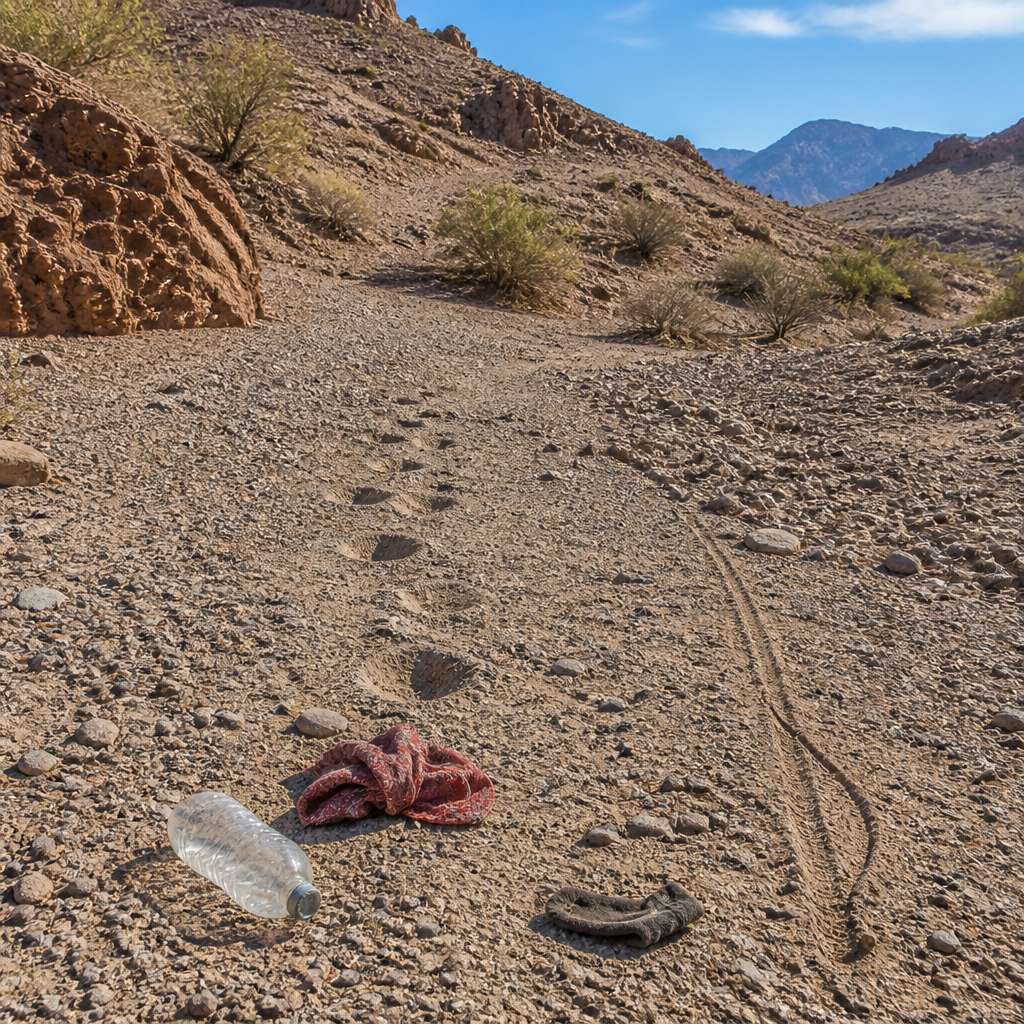
By midday I had managed only a few hundred yards and the sun leaned down like an accusation. I rationed the little water I had into half-teaspoon sips, timing each one, because swallowing too much at once made my stomach protest. I felt the uselessness of my tongue, swollen and clumsy against my teeth as I spoke to myself to keep moving.
I marked small victories: an extra rock passed, a flatter patch of ground reached, a slope negotiated without collapse. My shoulders ached from hauling the pack a few inches at a time, and I set a slow rhythm of breath and pull that made the canyon feel like a machine I was trying to outlast. I checked the horizon every few minutes for anything that might be human, anything that might be a road.
I told myself that a few hundred yards could still mean a road or a house, and then I lay down briefly to shave the pain off my back and realized I didn’t know whether I’d find either before the sun dropped.
The Cinders Gave Way
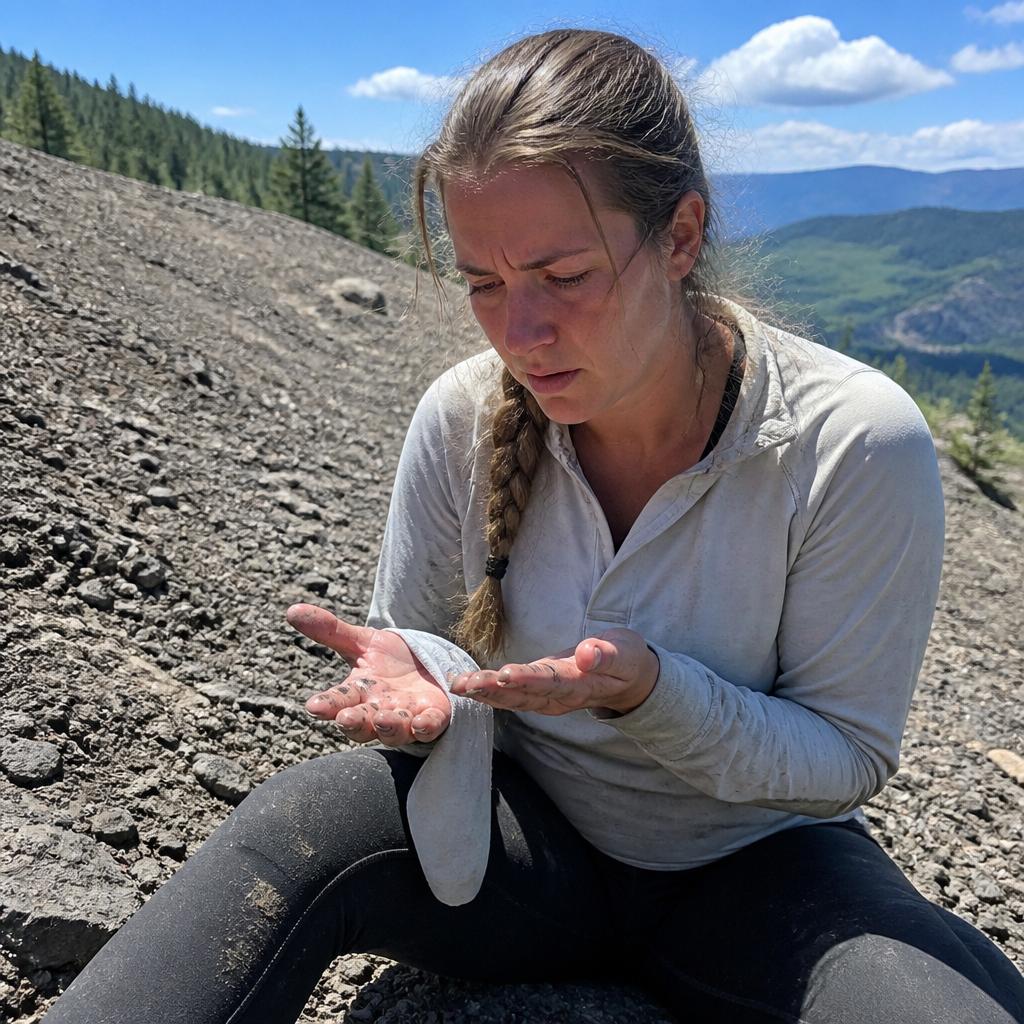
I climbed a slope of loose cinders because I wanted the view, any angle that might show a line of trees or a ribbon of road. Halfway up it collapsed beneath me and I slid, palms tearing on sharp black grit as the world leaned away. I sat at the bottom tasting the grit on my lips and counting the new searing lines across my hands.
I dug my fingers into softer patches and tried to stop the bleeding with a strip of my shirt, but the fabric only smeared dark lines across the skin. My knees shook from the effort and the sudden loss of altitude made my stomach lurch. I kept thinking that each cut was a ledger entry; the canyon was learning my debts.
I pulled my hands closer and watched the dust cake into the wounds, feeling foolish for seeking a view when the slope had been a trap, and I realized I didn’t know if I’d be able to keep climbing or if the next slope would do the same.
Blood Blackened By Dust
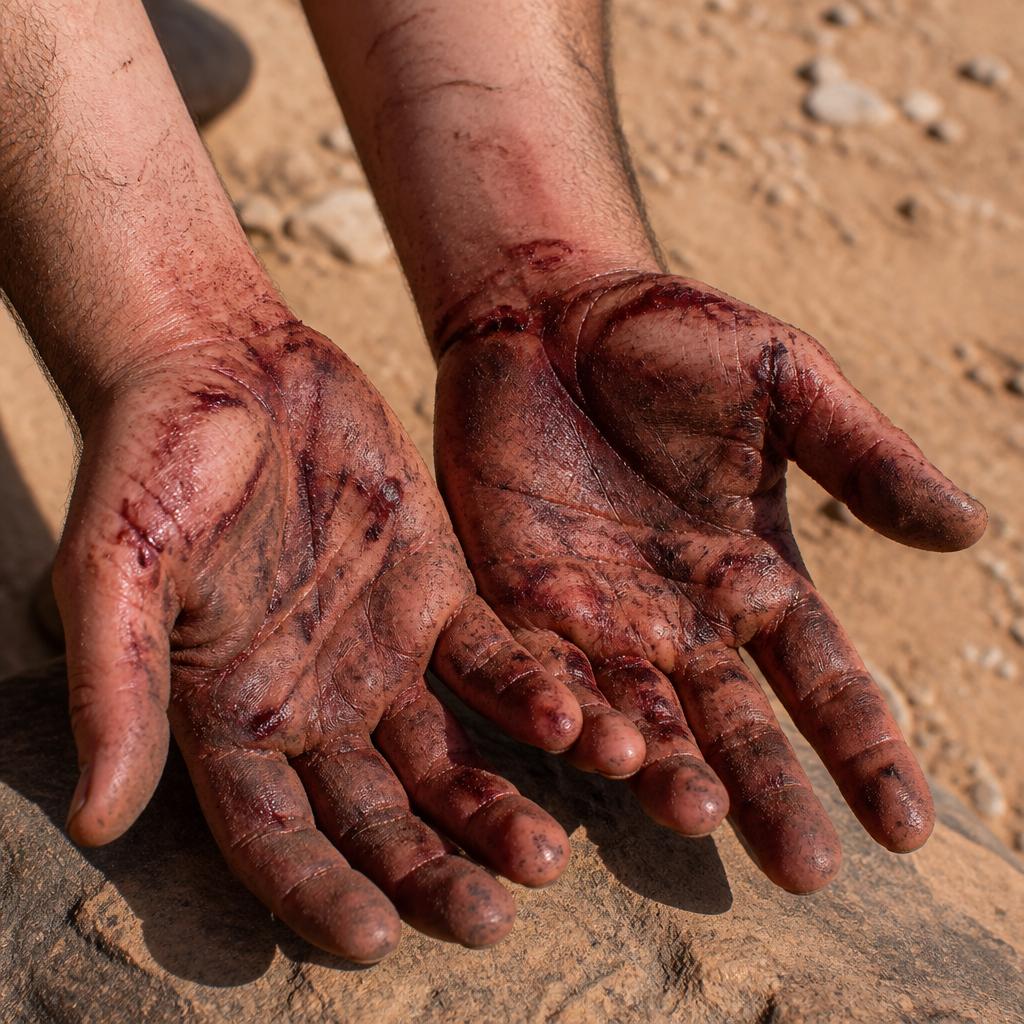
The bleeding dried quickly and darkened until it looked almost black against the dust that was everywhere. I understood then how small injuries ballooned into hazards when you were alone and couldn’t rest properly; a bloody palm could be a weakness that cost mobility. I wrapped my hand with the edge of my shirt and sat very still, counting breaths and watching shadows move across the canyon walls.
My mind kept filing consequences: infection, fever, the slow wasting away people warned about when you were left without help. I checked the bandage once more and tried not to think about the grit that had worked its way into the scab. The canyon felt like an accumulation of tiny tactics I had to keep beating back.
I forced myself to stand and test my weight, knowing that every step put that blackened scab at risk, and I didn’t know whether the next movement would rip it open or let it hold until I found help.
A Patterned Horn At Night
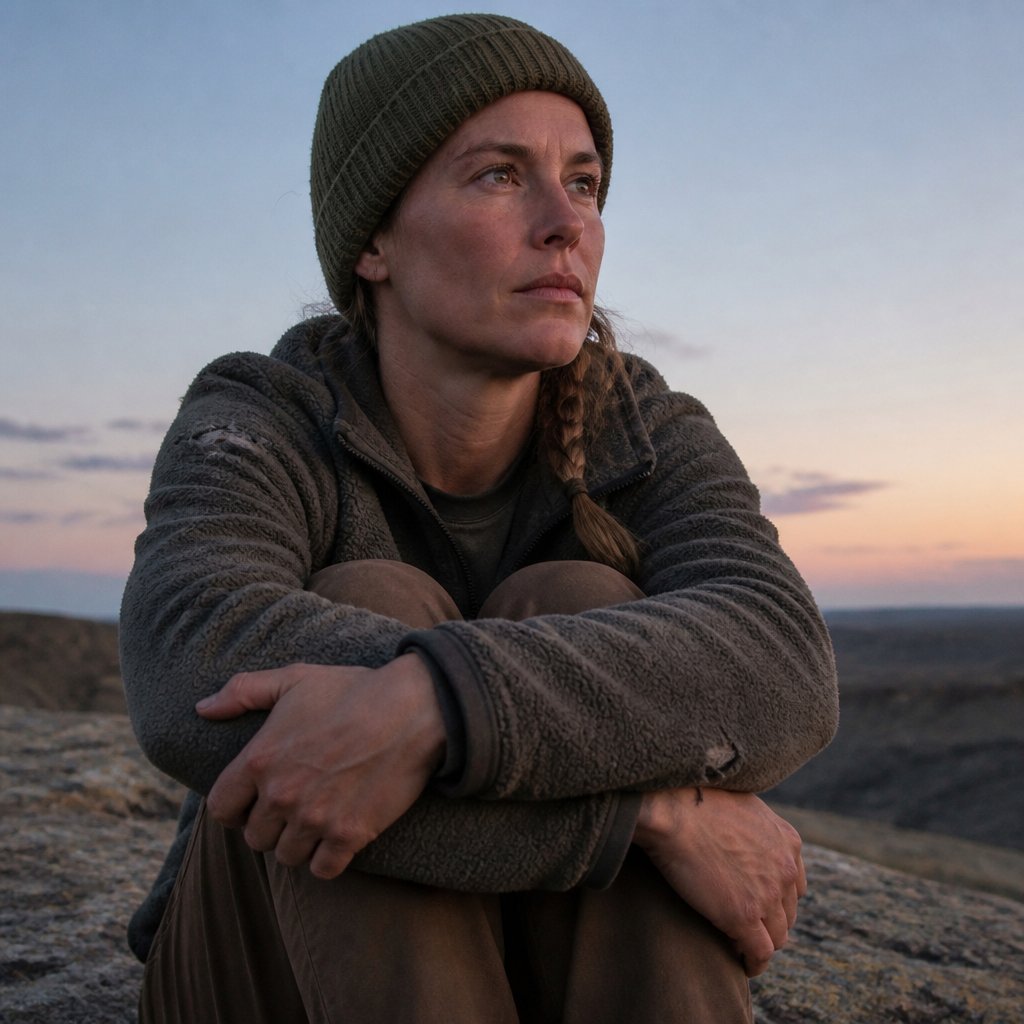
On the second night the canyon gave me a sound I could follow: two longs, a short, and a long. The pattern slit through the dark and I felt it vibrate low in my chest like a promise I could measure. After that came a deep, rolling rumble that I recognized from memory as a freight train, something that meant roads and towns and people somewhere out there.
I sat up and cupped my hand to my ear, trying to pin the bearing of the horn to the shape of the canyon, and the thought of a train near Flagstaff filled me with a sudden, dangerous hope. I imagined the line the sound made across the land like a thread I could follow. I wrapped my arms around my knees and listened for the horn to come again.
The horn sounded once more in the distance and I traced its vibration through the canyon walls, measuring the direction with every beat, and I didn’t know whether following it would bring me to a road or only to a distant, unreachable line of tracks.
Sound Replaced My Compass
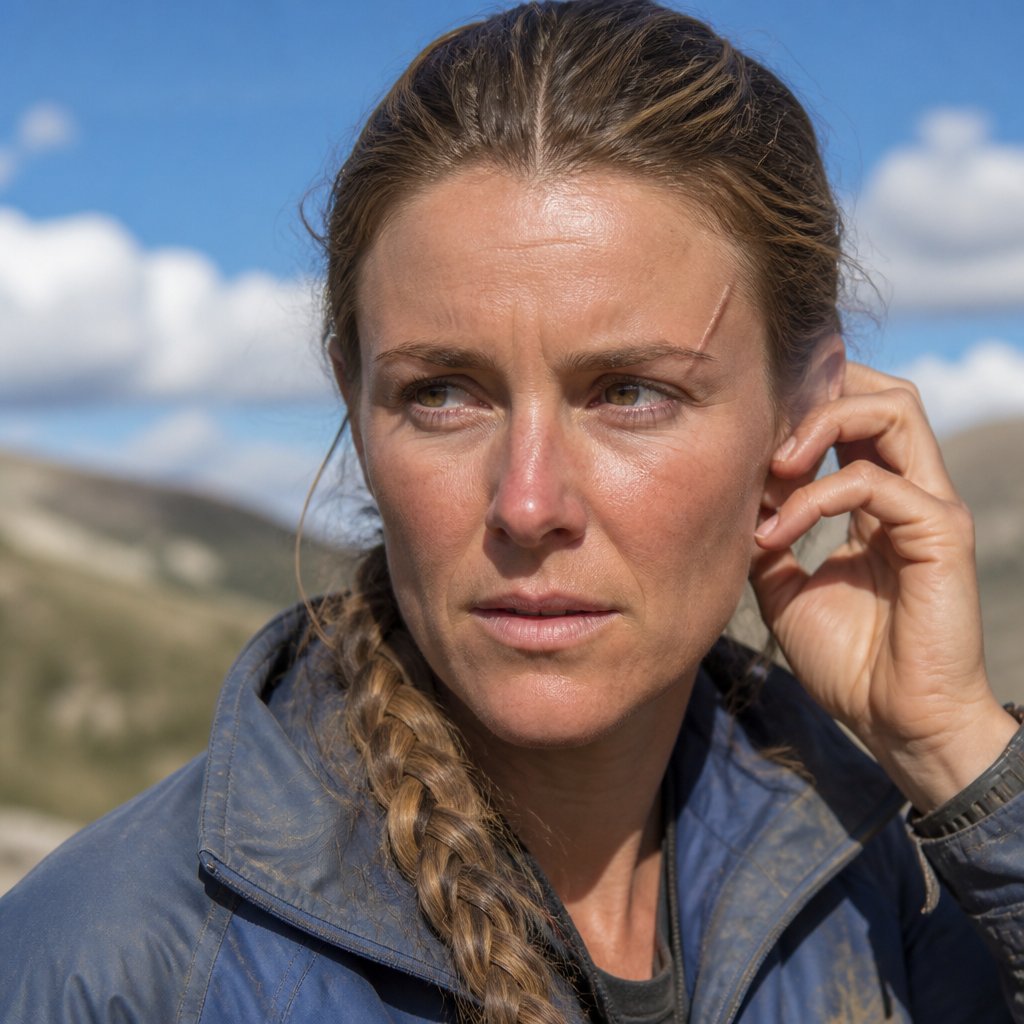
I stopped thinking about leaving and started thinking about getting to the sound. The horn became my makeshift compass and I stayed awake waiting for it to confirm direction. I rehearsed the bearings in my head, turning my face to the canyon mouth and letting the little map of sound settle into my bones.
The smell of diesel carried on the wind once, sharp and oily, and I took that as extra confirmation of the train’s presence somewhere beyond the rim. I shifted my weight and imagined the line I would need to follow at first light, tracing it with my finger on the dirt. I slept fitfully, jerking awake to every distant rumble.
When I woke I checked the horizon and tuned my ears again, deciding that the sound would be the thing that saved me or else lure me in the wrong direction, and I didn’t know which it would be.
A Sock Became A Filter
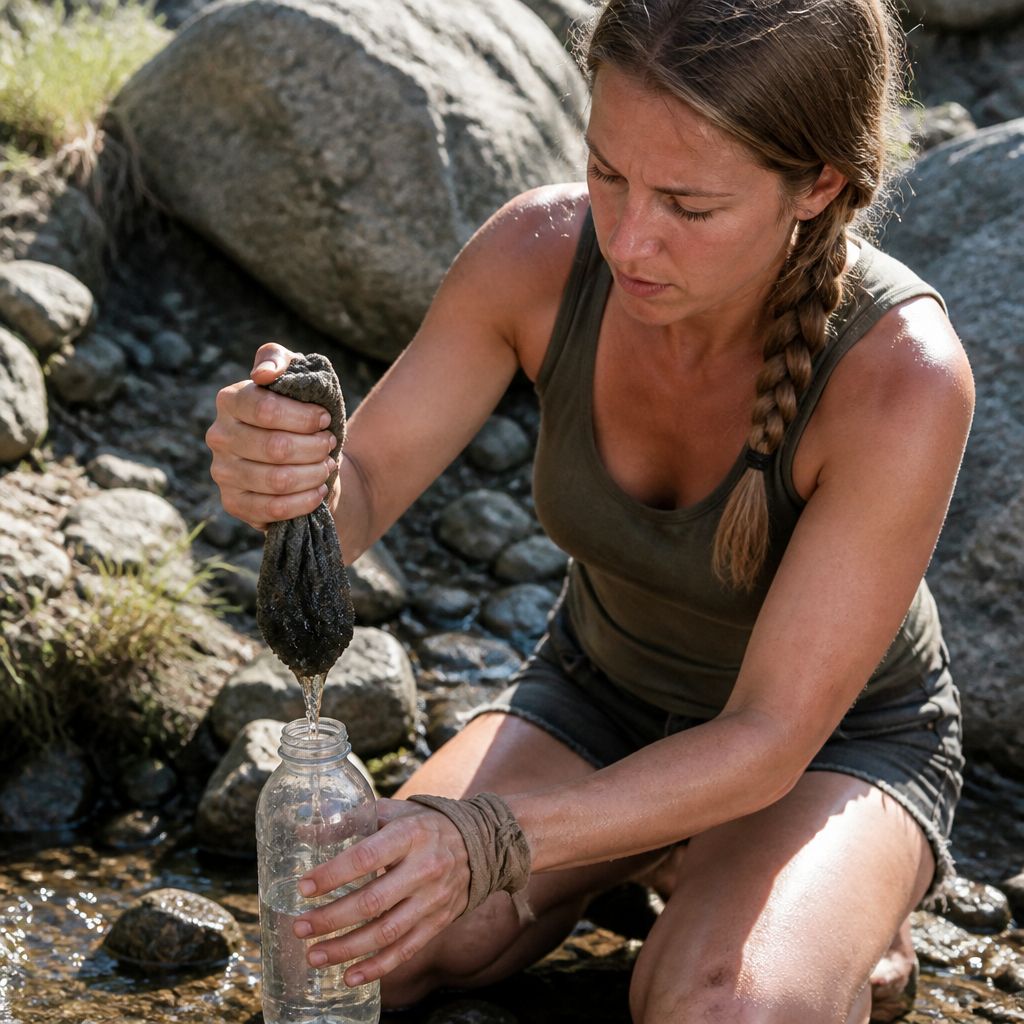
Day two’s water was smaller than I wanted and the seep was thinner, so I improvised. I sacrificed a sock, stretched it over the bottle neck, and poured the trickle through to catch the grit before it hit the filter. The grit stayed in the fabric and my fingers came away gritty from handling the sock.
I held the bottle with trembling hands and watched the filtered water bead into the bottom, measuring it like treasure. I used the sock again and again, each pass slower and more careful until I convinced myself I’d extracted enough to keep going. I tied the used sock to my pack like another small victory.
I drank and felt the wetness steady me for a moment, then packed the bottle and readied to move toward where I thought the train sounded, and I didn’t know whether that sock trick would be the last clean water I’d manage or a enough to carry me out.
Talking Through The Steps
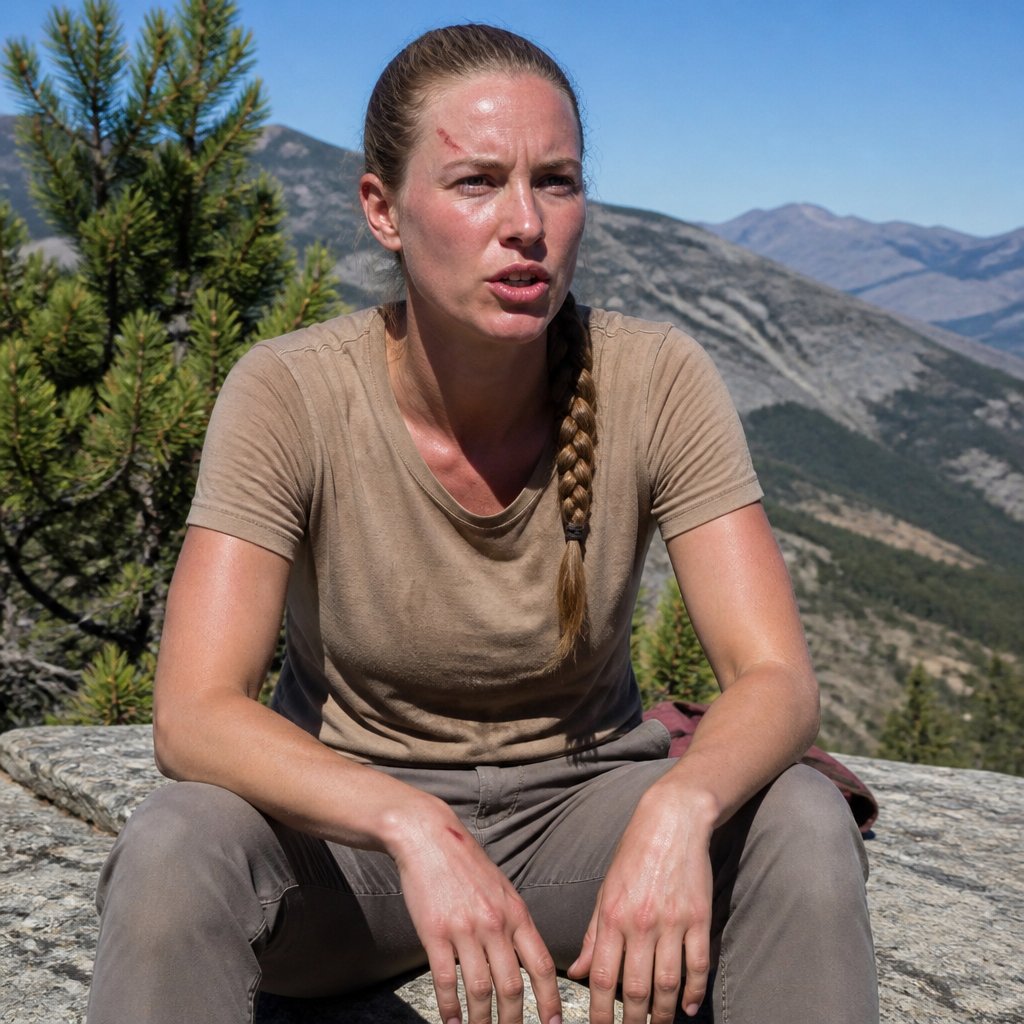
To keep panic from swallowing me whole I coached myself like a medic with a patient: breathe, move left knee, place hand, don’t rush. Saying it out loud turned motor patterns into instructions I could follow when my mind wanted to dissolve. I kept my sentences short and concrete and counted repetitions until the canyon’s noise blurred into a background hum.
My voice sounded thin and foreign in my ears but steady enough to pull me through a set of slow, controlled movements. I rehearsed getting to the ridge, rehearsed how I’d rest and how I’d scan for the train, and I marked time by the cadence of my own words. The ritual felt childish and practical at the same time.
I crawled a few more inches and said the steps again, because the only way out seemed to be keeping the list of motions in front of me, and I didn’t know which instruction would fail me first.
Orange Tape In The Brush
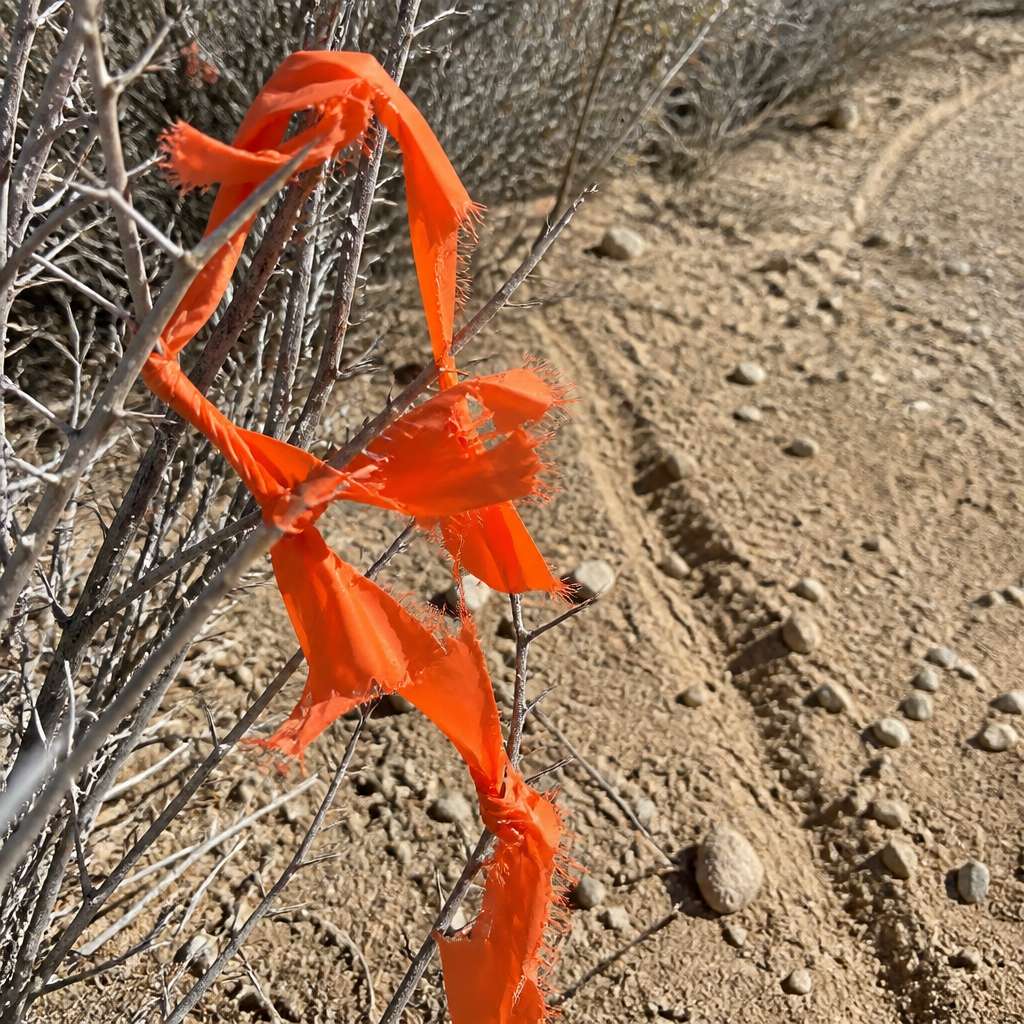
Late on the second day I spotted a flash of color tangled in a scrub of brittle brush and crawled toward it like it meant salvation. It was orange survey tape snagged on a branch, frayed and sun-bleached but definitely human. When I touched it my hands shook and I cried because it felt like proof someone else had been nearby, even if they weren’t there now.
I walked the line of tape, following where it trailed under a shrub and disappeared down a small draw, imagining crews, markers, or a nearby road. My breath hitched with every new knot of plastic I found, and I tried to force myself to be practical and not to count that as rescue. I tore a small strip to tie to my pack, wanting to leave my own mark as proof that I’d been here too.
The tape snapped with a dry whisper as I pulled it free and I stood listening for any other sign of people or engines, and I didn’t know whether the tape led to help or only to a survey line that ended nowhere useful.
Night Frost Came Fast
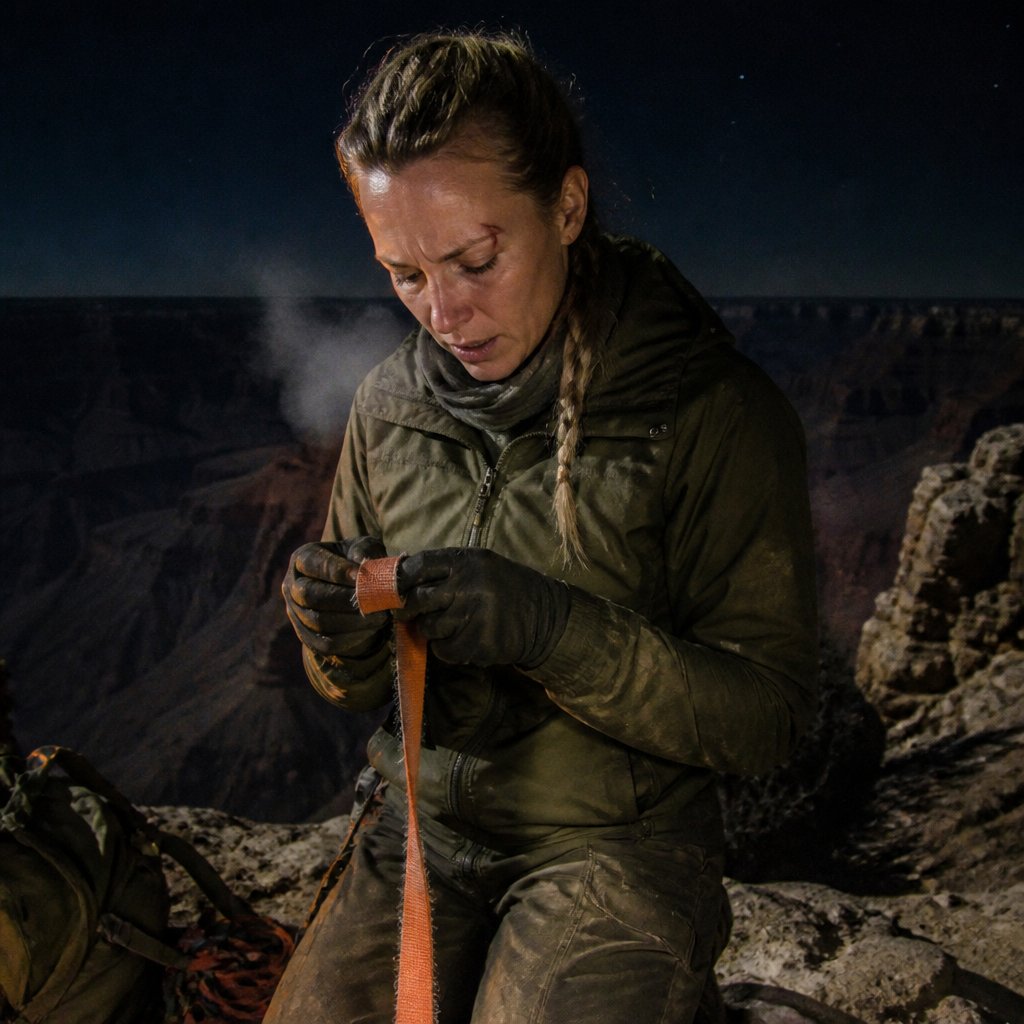
I huddled under the slab and watched the breath steam into the small dark. The lip of the canyon had turned to a line of glittering crystals by the time the sun went down, and my hands shook until they weren't mine. The cold that wouldn't stop sank through the thin jacket and bit the inside of my nose so hard I tasted iron.
I tried to sleep wrapped against the rock, but every shiver made the broken leg talk in new ways. The shaking felt dangerous, like it might jar the bone back into something worse; it wasn't the pain that scared me, it was the numbness that slid up my calf and into my knee. I kept rubbing my thigh until my skin burned with friction but the numb patch just spread.
When the moon dropped behind the rim the temperature fell another notch and the tape I had tied early frayed at the knots. My fingers could barely tie it anymore, and when I loosened it to let circulation come, the leg went colder and quieter in a way that made my heart kick. I didn't know if the numbness would come back to life or turn into something that wouldn't wake up again...
Moving In Short Bursts
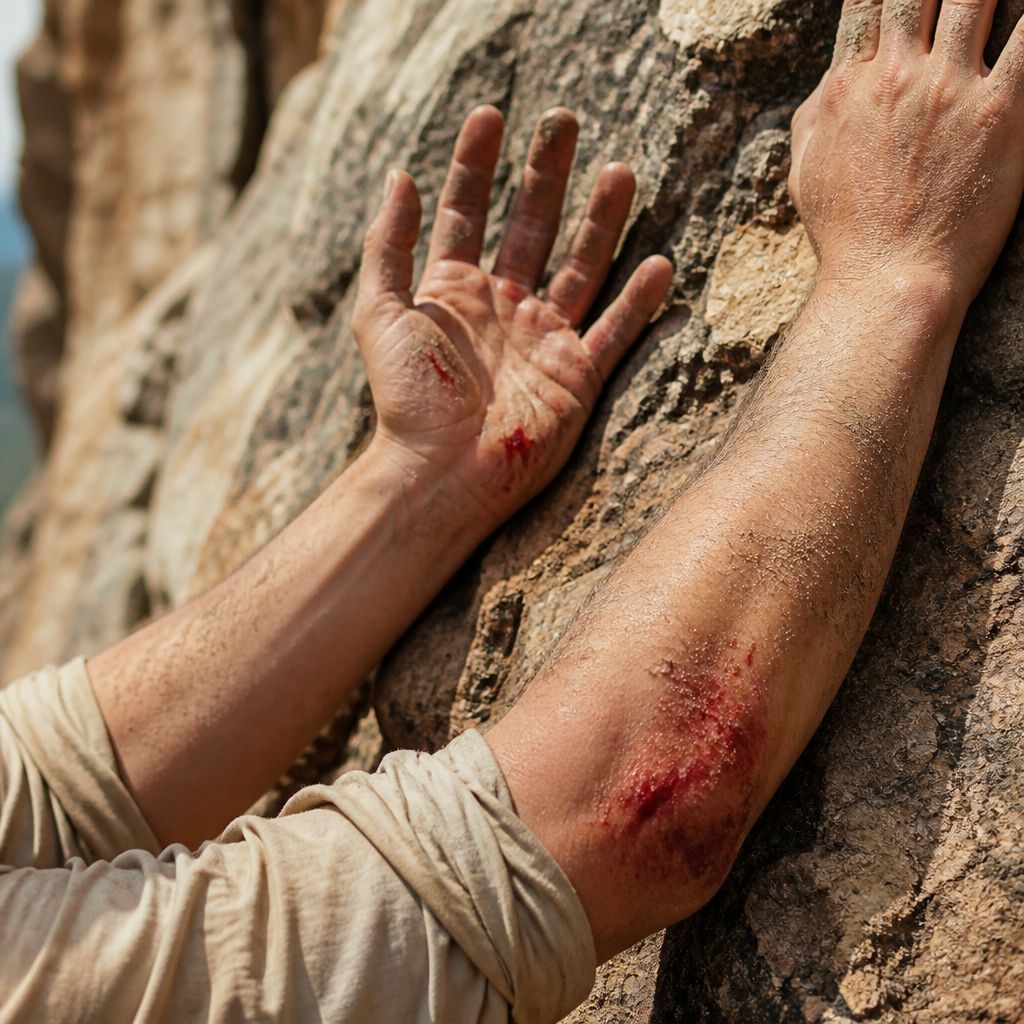
I moved in little fits and starts, like a machine with to much friction. Short bursts of crawling, a long rest to let my breath normalize, then another forced push forward along the canyon floor. My elbows were raw from the gravel; every scrape smelled like metal and dirt.
My palms split open against stone that had no mercy, and I could feel the sting in the split skin with every push. My lips had crusted shut in places from dehydration, a dry, gritty tackiness that made swallowing an achievement. The salt taste in my mouth was constant and thin, and it made me imagine water even when none was there.
People imagine you grow in the quiet, but I was shrinking into very small movements—three feet, a rest, another three feet. I kept a rhythm that felt ridiculous to any sensible person, but it was everything I had. I couldn't tell if I was getting closer to any kind of help or just wearing myself down more quickly...
The Canyon Finally Opened
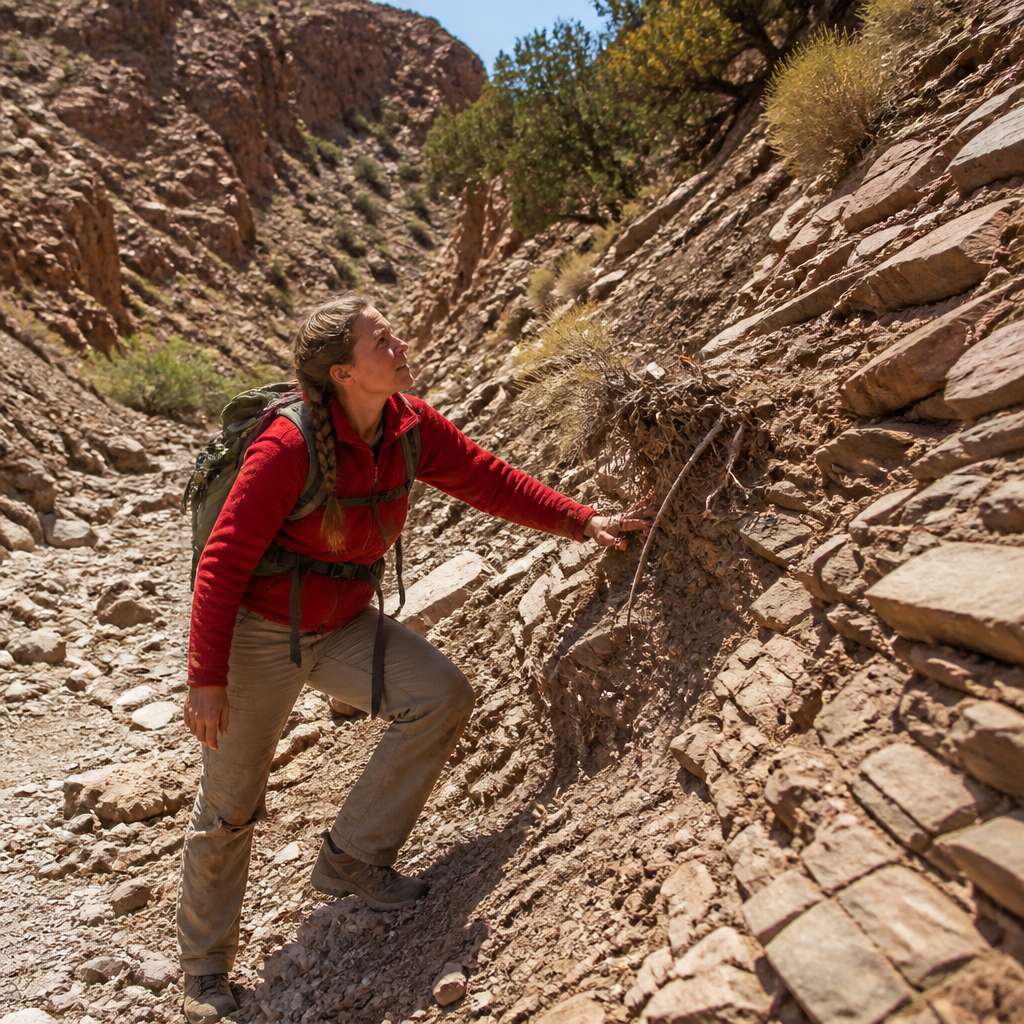
The walls of the canyon loosened into a wide dry wash, and for the first time I could see a slope that looked climbable. It was ugly—slanted shale and loose dirt threaded with wiry roots—but it offered an angle instead of a cliff. The dust had a dry, rusty smell that made the back of my throat itch.
I tested handholds that shifted under my fingers and wedged my boot toe into tiny depressions until they held long enough for the next move. My red fleece had become a rag but I kept it on; it stopped the sun and held my sweat. Every small hold felt like the wrong thing in the world, but wrong was better than staying below.
I kept calculating how far my leg could bear me step by step and how long the water in my bottle would last if I made it over. The slant rose into a thin route choked with roots that looked ugly but possible. I wanted to commit to it, but I didn't know if the route would hold my weight or if the next slip would be the last I could manage...
The Filter Snapped Open
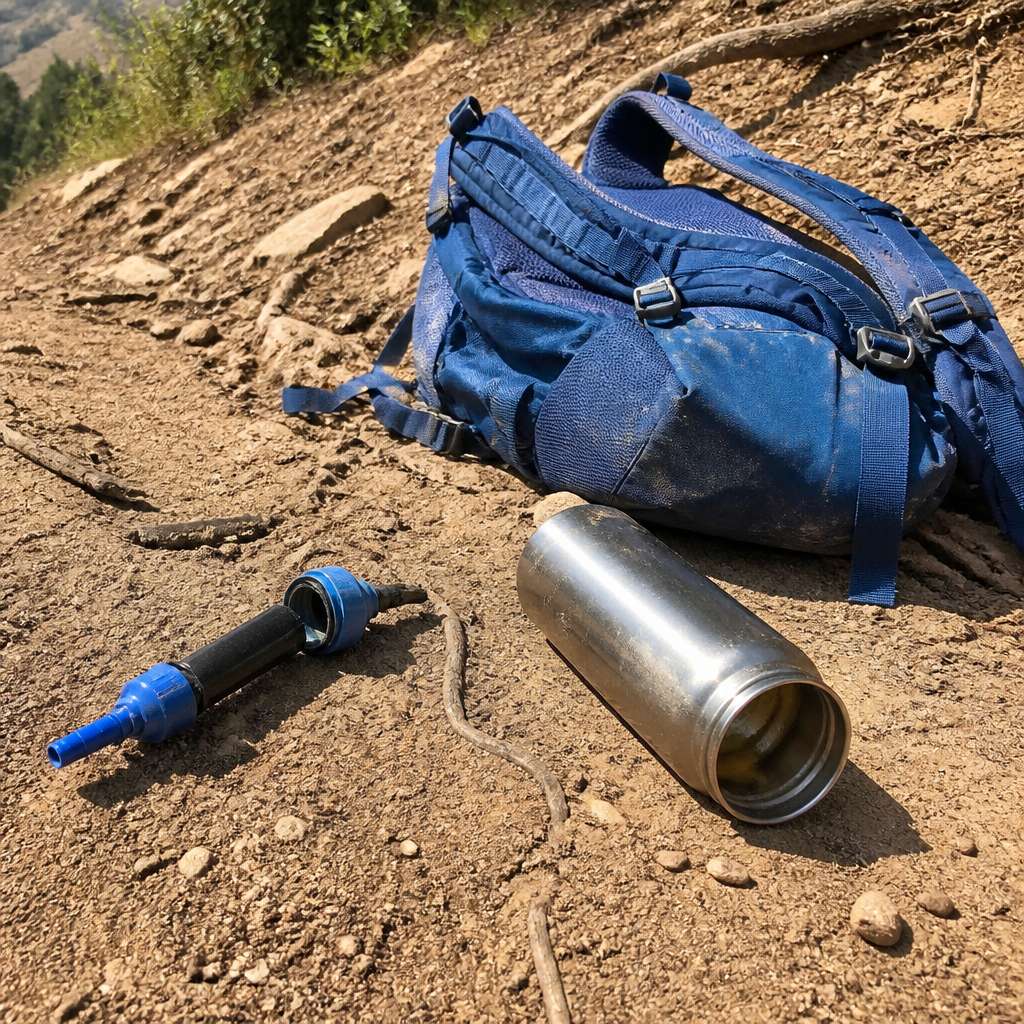
Halfway up a loose pitch I misjudged a root and fell backward onto my pack with a hollow, sickening thud. The impact sent a tiny shower of grit into my mouth and the suddenness made my breath flare. There was a clean snap, a sound like brittle plastic breaking, and then the filter lay in two useless halves against the dust.
I fished out the bottle and tipped it: barely a cup of water sloshed and the rim trembled in my hands. The liquid smelled faintly of the metal from the dent in the bottle and tasted faintly of everything I'd licked from my lips that morning. I held it like a flask of something sacred and stupid.
The rest of the climb suddenly looked much longer; roots I had trusted now looked treacherous under wet palms. I could make a plan for moving with one good leg and one bad, but I couldn't make water where there was none. I cupped that small cup against my mouth and didn't know if it would be enough to keep me moving up, or if I was already out of options...
Roots, Dirt, Rest, Repeat
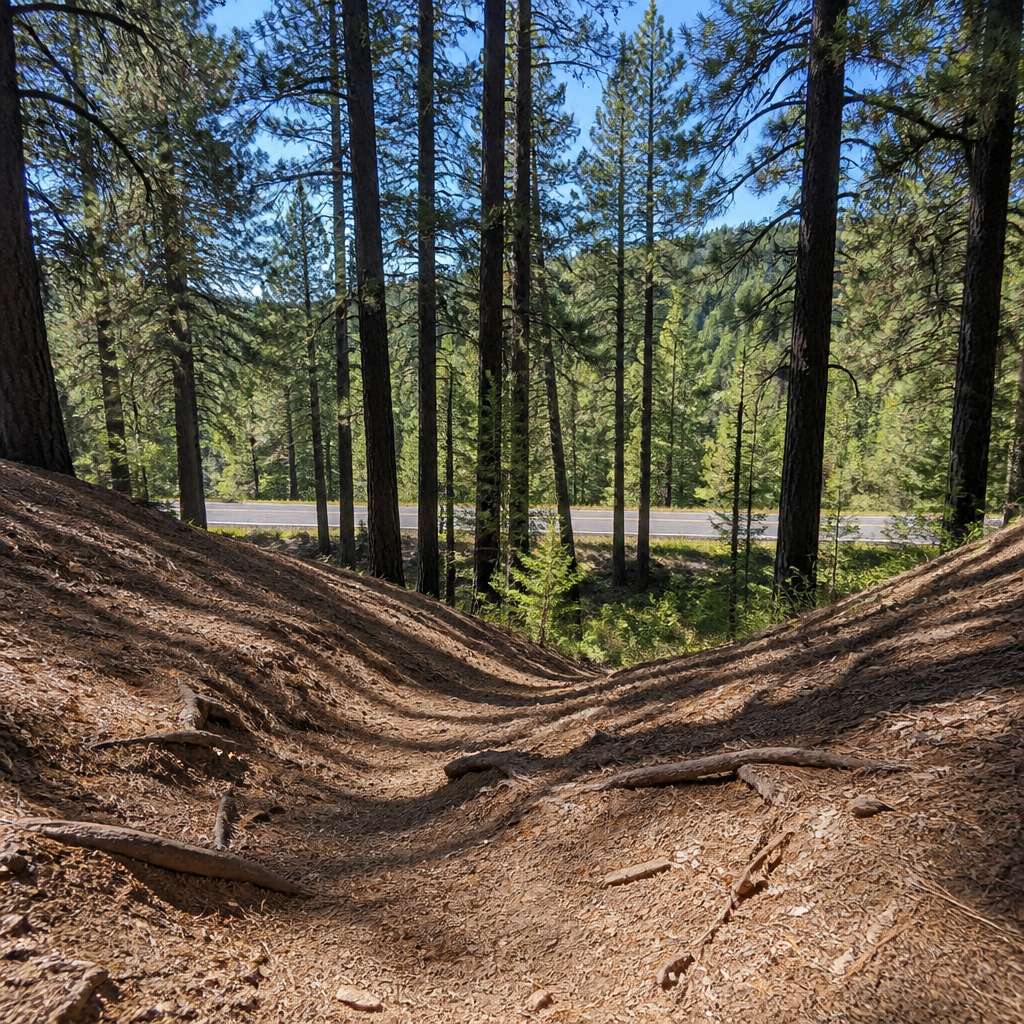
I kept hauling myself the way I'd learned: roots, dirt, rest, repeat, moving in tiny increments until my muscles remembered how to do small tasks. Each time I crested a little ridge I could hear something human and distant—a soft, machine rumble that I kept telling myself was a truck. The smell of pine came through the wash like an accusation; it smelled like civilization and made my throat tighten.
My shirt was crusted with sweat and dust; the braid had picked up twigs and the crescent scar above my left eyebrow ached every time I turned my head. The ground felt spongy under the last of my steps, and then the trees opened and the world changed from rock to needles and loose loam. I sat and listened because I didn't trust the sound to mean anything real.
Through the trees, a thin line of noise sharpened into something like tires on pavement, but it could be a mirage. I pushed toward it, pulling with my arms and stepping with the one good leg, and when I finally topped the rim I heard the road through the leaves. I crawled forward until the sound filled my ears, and then I realized I couldn't tell whether the noise was close enough to matter or merely a promise of something that would pass me by...
I Waved My Jacket Wildly
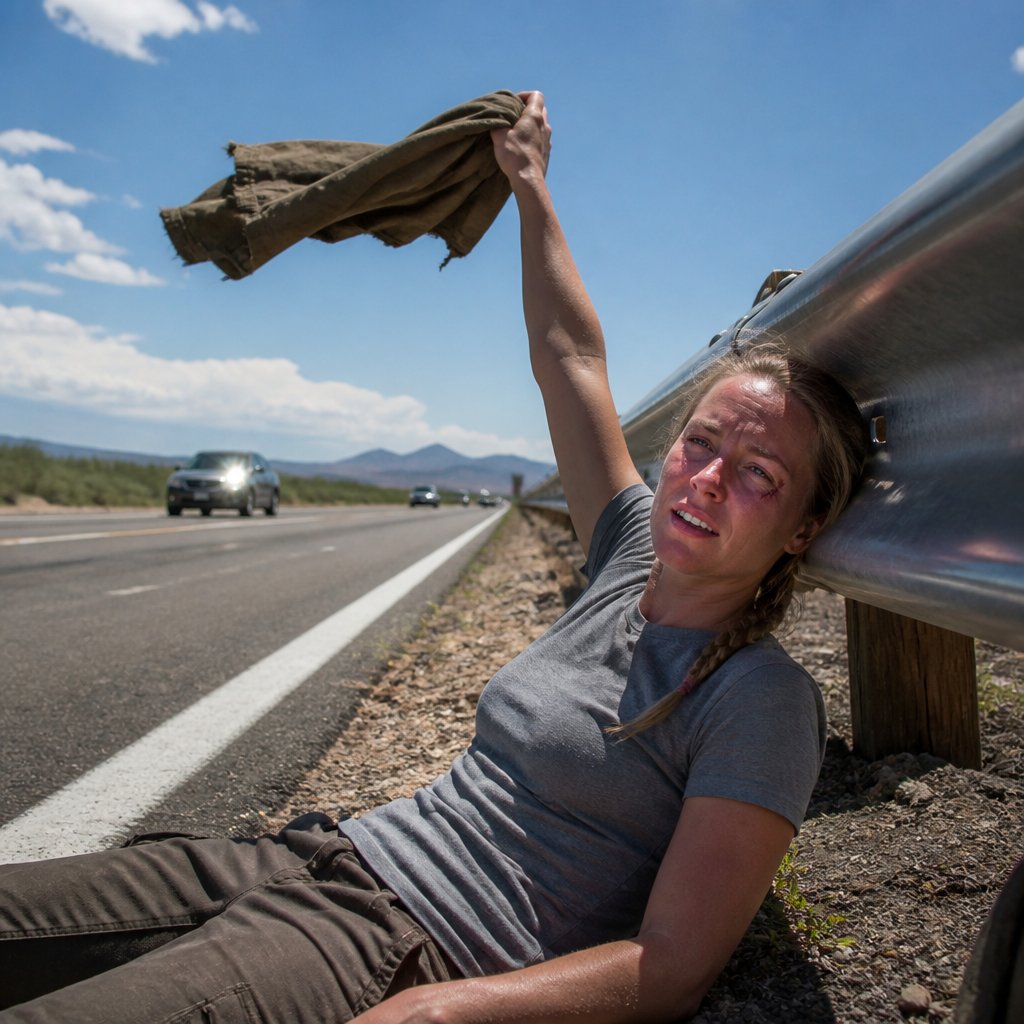
I dragged myself to the guardrail on the shoulder of US-180 and lay there, sucking air and clinging to the rusted metal with one hand. The guardrail was ice-cold under my palm even though the sun was high, and the paint had a smell of old grease and gasoline. I tied my jacket to the rail and waved it like a flag from a prone person because I couldn't stand without falling over.
Cars passed in a blur of color and noise; every one that didn't slow felt like a small betrayal. My lips were so cracked that even the urge to speak came out thin and papery, and when I made a sound it felt like a small animal trying to escape. People were men and women in bright clothes and mirrored windshields; none of them paused.
I watched the road until my eyes burned and my shoulder ached from holding the jacket up. My body had the vague memory of moving but every part of me was exhausted beyond sense. I prayed aloud, a rasp that tasted of old dust, and waited for the next car to see me or to pass me into some further nothing...
A Pickup Pulled Over
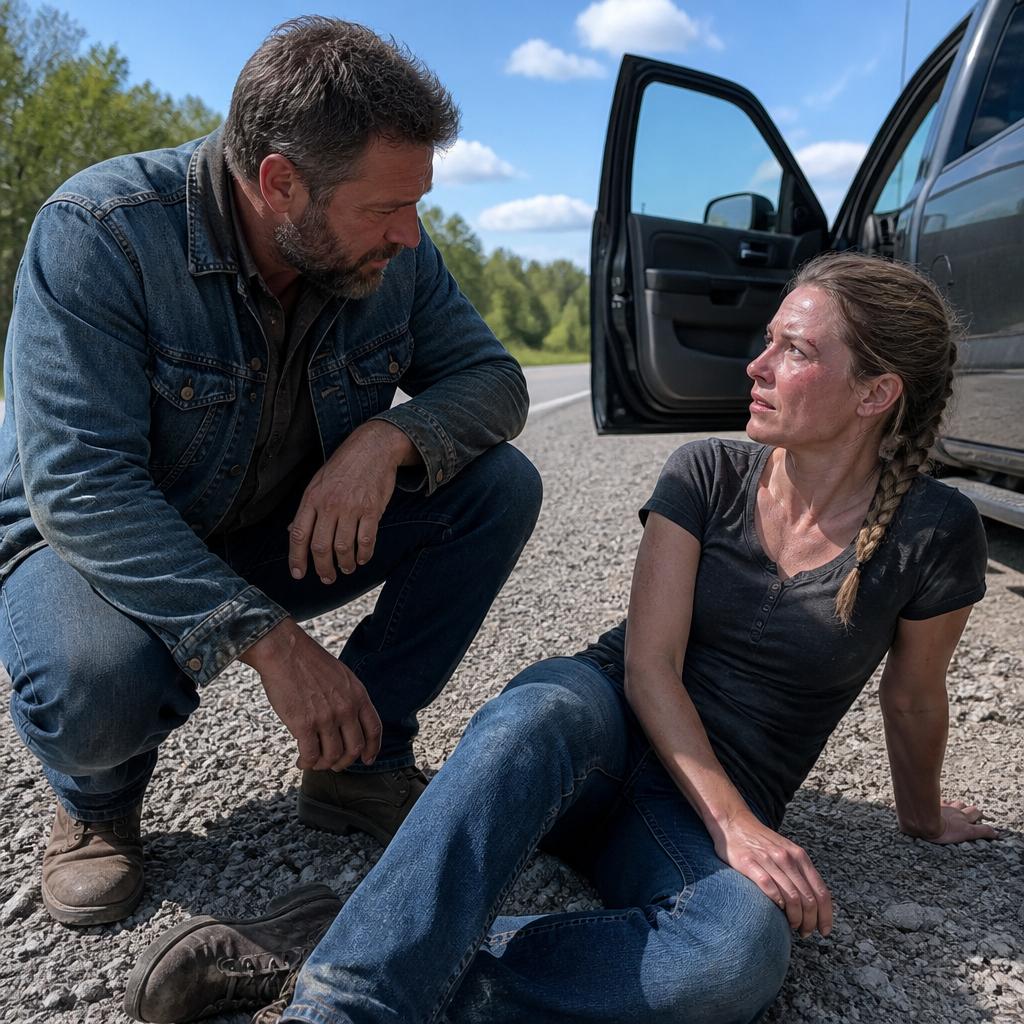
A pickup with a dented tailgate slid onto the shoulder and stopped before I could decide to be afraid. The driver threw open his door and ran over before I could catch a full breath; he was a broad-shouldered man in his late forties with a greying beard and short hair, wearing a faded denim jacket and work boots. His boots hit the gravel with a sharp crunch and his face was open and fast with concern.
He crouched down beside me and his voice was close and practical. When he asked how long I'd been out there the words came out of me like sand: "Three days." Saying it did something to him; his hands went from checking my forearm to moving toward his truck in a kind of automatic motion. He didn't say the obvious next thing right away, and there was a pause where I tried to read his face.
He asked where I had come from and whether anyone else knew, and I answered in the same thin voice because my mouth was dry and my throat kept sticking. He smelled like diesel and wet wool and the heat of the cab, and his eyes flicked to the road behind us. He said, "Hold on," but then he looked up the highway and didn't say whether that meant he would take me somewhere or call someone first...
Train Horns Still Live
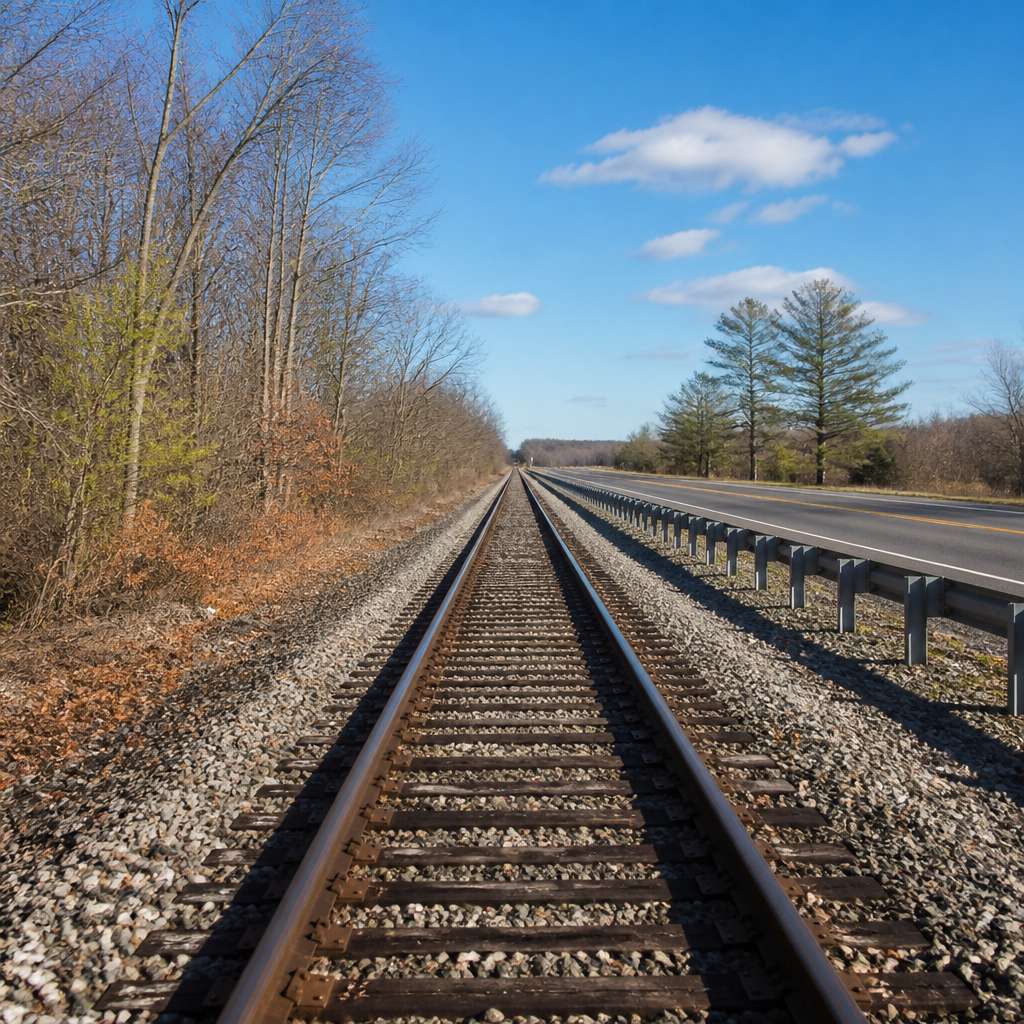
When it was over I learned how to walk again and how to keep my balance on flat ground. I relearned how sturdy the world could be, and how carefully that sturdiness could be taken away. I stopped hiking alone without a satellite messenger and a written plan pinned to my glove, habits I had sworn I would never let lapse.
The repair healed the bone and the scar softened, but some memories kept their edges. I would stand at the window sometimes and feel a tightening in my chest that matched the sound of metal on metal, and it always surprised me how a low, distant rumble—like a train horn or a truck rolling past—could push everything back into the canyon. The metal taste that had filled my mouth on that last day lived in my mouth like a memory.
I went back the next year to the rim and found the place where the slab had sheared and left a thin line of dust, but I couldn't tell if I visited to mark danger or to remind myself I had come through. Train horns on US-180 still woke me at night, and some mornings I would stand at the sink and not know whether the sound was real or a leftover piece of alarm that hadn't learned to sleep yet...
Would you have kept hiking after your boot snapped?