


Why I Never Strayed Far
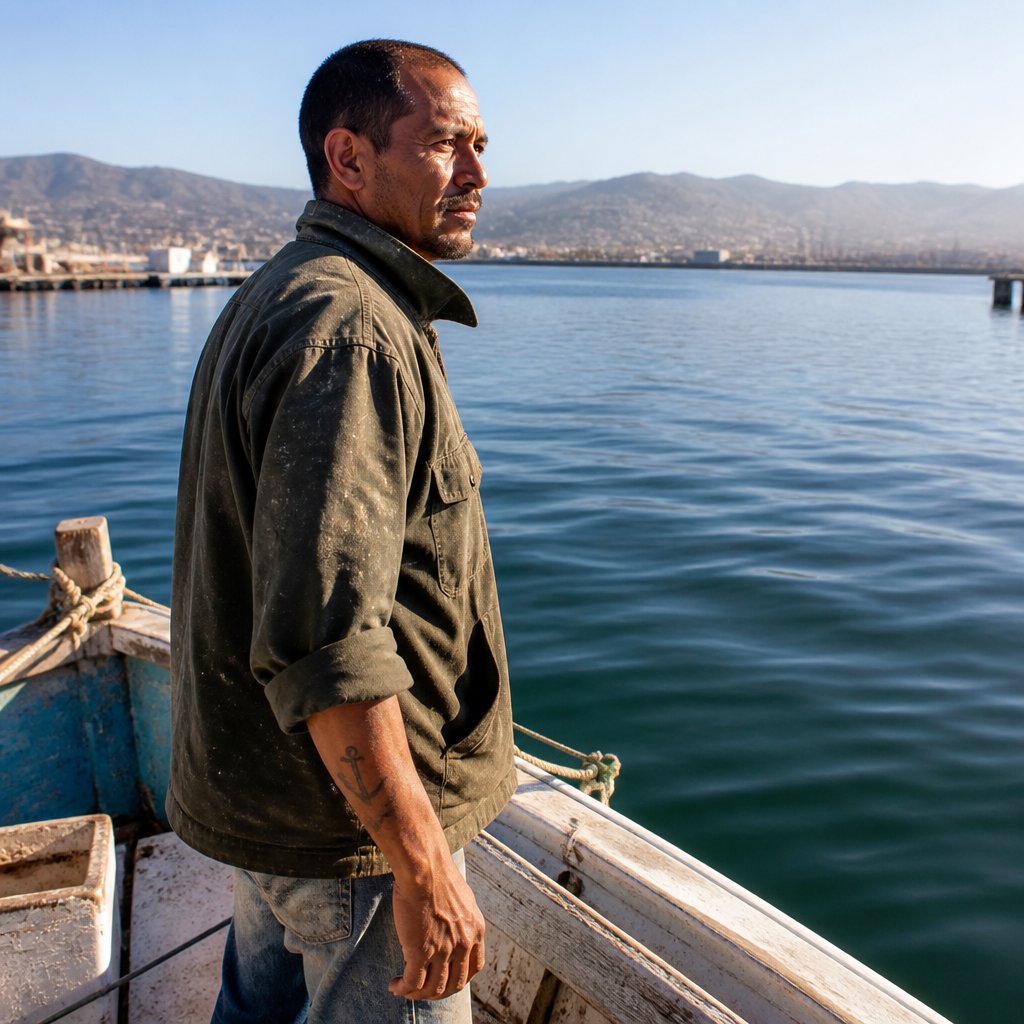
I always kept the boat close enough to see Ensenada’s coast. The city’s outline was a steady presence on the horizon, a line I never wanted to cross. It wasn’t just habit—it was a rule I lived by: home before dark. The salt in my throat felt familiar, like a quiet promise that I’d be back on solid ground before nightfall.
Every morning, I checked the gear with a routine precision. The fishing line, the cooler, the engine—all parts of a rhythm that had kept me going for years. The sea could be unpredictable, but my route rarely was. I liked that predictability; it was a comfort. The sound of the engine humming just right was a kind of reassurance I clung to.
But that morning, as I prepared to cast off, I felt a small unease. It was subtle, something I couldn’t quite name. The wind was light, the sky clear, yet something about the way the waves lapped felt different. Still, I pushed the feeling aside. I had places to go, a catch to make, and a routine that never failed me—until it did.
Skipping Repairs Against Advice
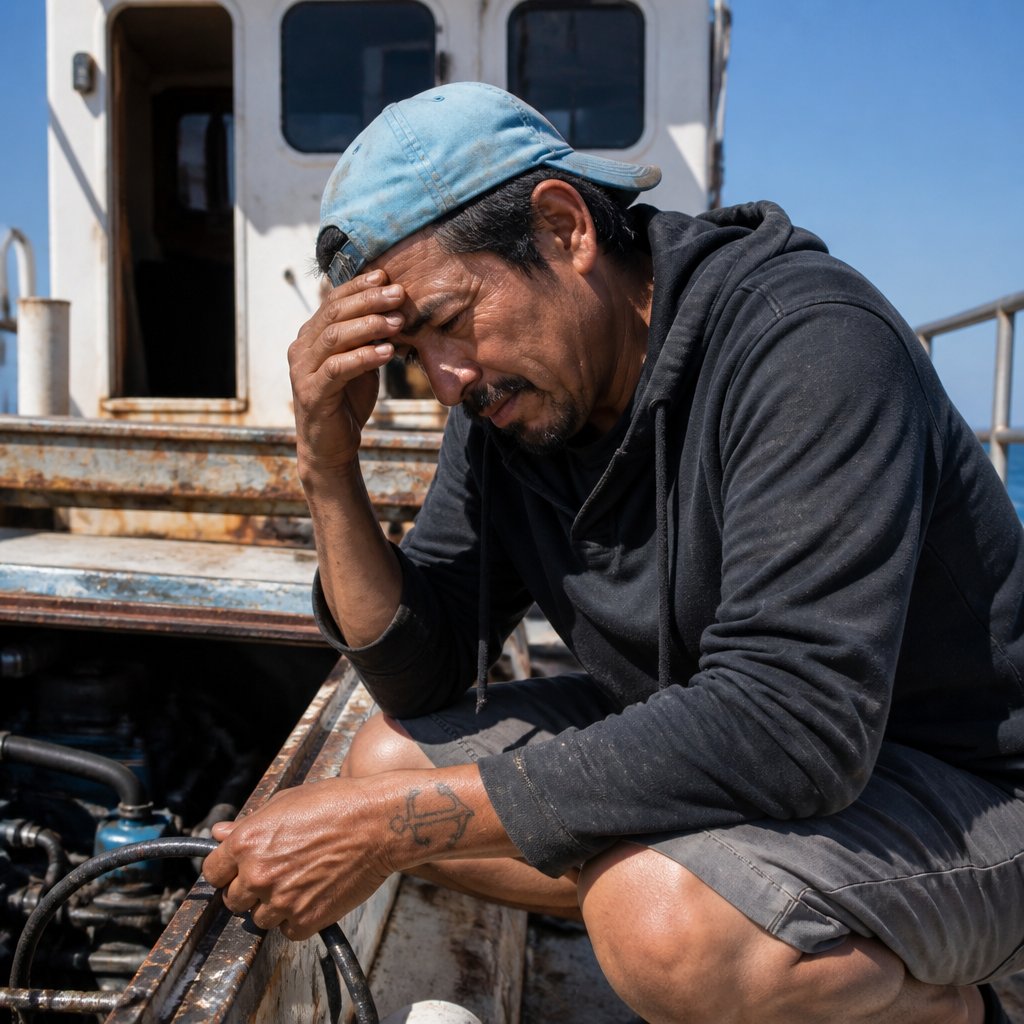
Money was tight. The small fuel line leak I found last week nagged at me, but fixing it meant extra days in town and extra cash I didn’t have. So I chose to postpone it, telling myself it was minor enough to manage for one trip. I told no one—keeping that worry tucked away.
Even the radio got the same treatment. I should’ve done a proper check before heading out, but I was in a rush. The crackling sound had been faint before, and the spare battery was looking old. Still, I thought it would hold. I put the handset in its place without a second thought.
I remember the taste of salt on my lips that morning, sharper than usual. The ocean felt alive and restless, but I ignored the signs. My focus was on the catch, the day ahead. I told myself everything would be fine, but deep down, I knew I was betting more than I should.
Leaving With Bare Essentials
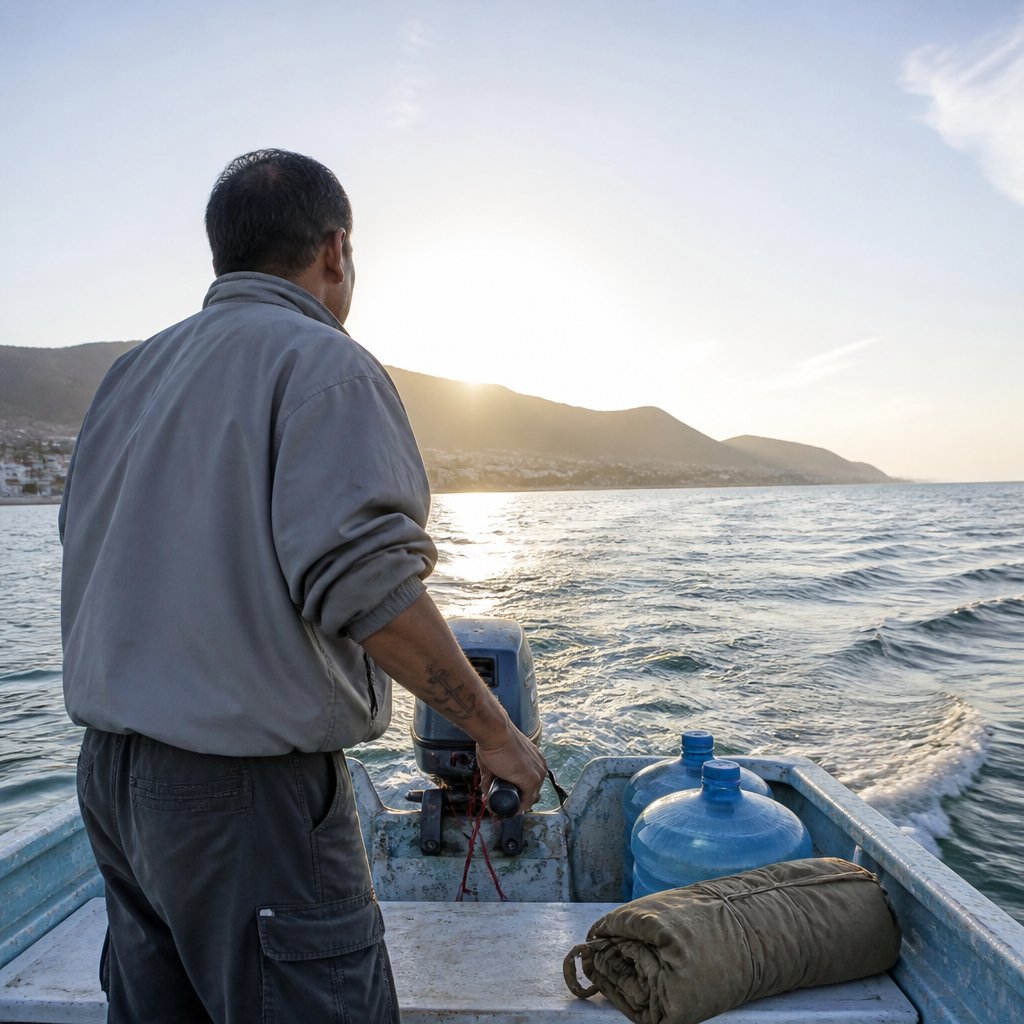
Before sunrise, I shoved off with just the essentials. Two jugs of water, a sack of tortillas and beans wrapped in a stained cloth, a handline, a tarp, and ice packed tight in a cooler. No fancy gear, no EPIRB, no satellite phone. Just what I needed to catch fish and get back safe.
The salt air stung my nostrils as the boat cut through still water. The chill clung to my skin beneath the collar of my faded gray windbreaker. Everything felt simple and necessary. I tried to focus on the steady rhythm of the waves against the hull, on the feel of the boat beneath my hands.
Even then, the vastness of the ocean stretched in every direction. The line of the shore was still close, but I knew that would change as the day went on. I didn’t think much about what I didn’t bring—until later when the quiet began to press in.
When The Engine Overheated
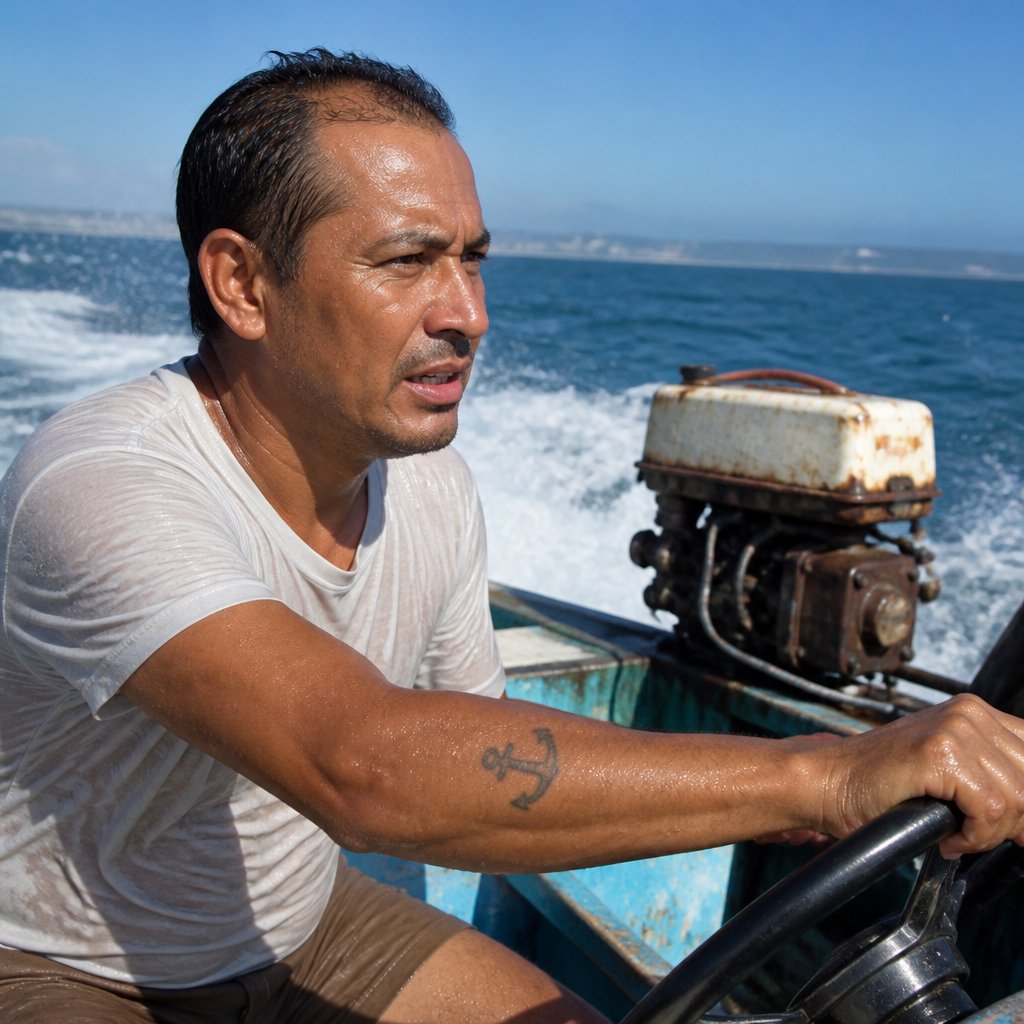
The day started smooth, but then the engine temperature spiked. The heat whispered under the hood, a warning I couldn’t ignore. The needle climbed fast, and I felt the motor lose its hum. Suddenly, the outboard seized hard; the boat lurched sideways as the engine died.
The spray hit my face, cold and sharp as the boat yawed uncontrollably. I gripped the wheel tight, my skin slick with salt water mixed with sweat. The ocean around me went strangely silent except for the slap of waves against the hull.
I could barely see the coast anymore. The gray line on the horizon shrank into a faint blur, and the boat started to list slightly. I knew I had to do something fast, but the engine was dead weight behind me. The air tasted metallic, and my heart pounded against my ribs.
Radio Fails With One Crackle
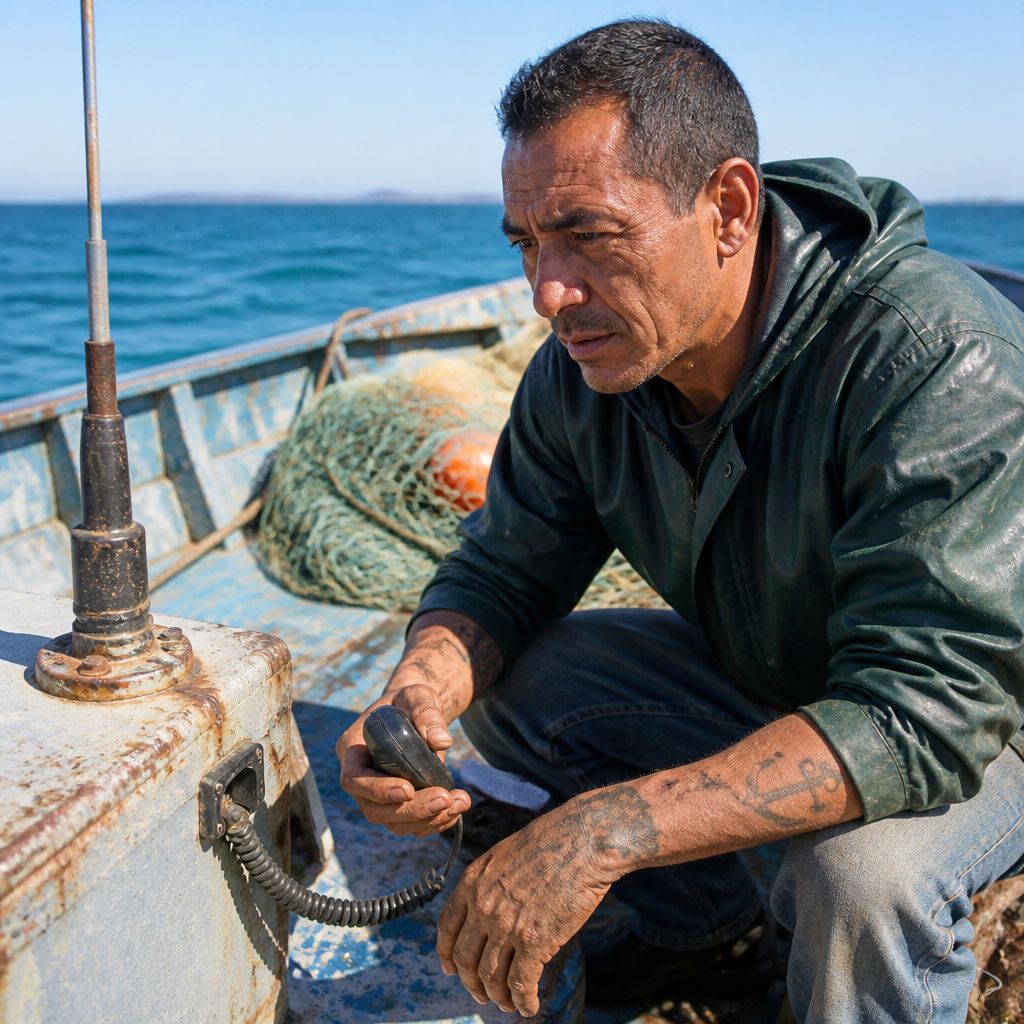
My hand found the VHF radio instinctively. I pressed the button—one crackle, a faint spark of hope—and then silence. Dead. I pulled the handset away and saw corrosion blooming green where the antenna met the base. The terminals on the battery were crusted white with salt, corroded beyond hope.
The smell of rust and salt was sharp in the air, bitter and hopeless. I shook the handset, listening for another sound. Nothing. The radio was as dead as the engine. The tiny crackle that had spoken first now felt like a final goodbye.
I stared out at the water, the coast a thinner line by the minute. The cold sweat on my neck was uncomfortable, but nothing compared to the cold sinking feeling in my chest. Without the radio, the ocean had swallowed all chance of help.
The Coast Became A Gray Blur
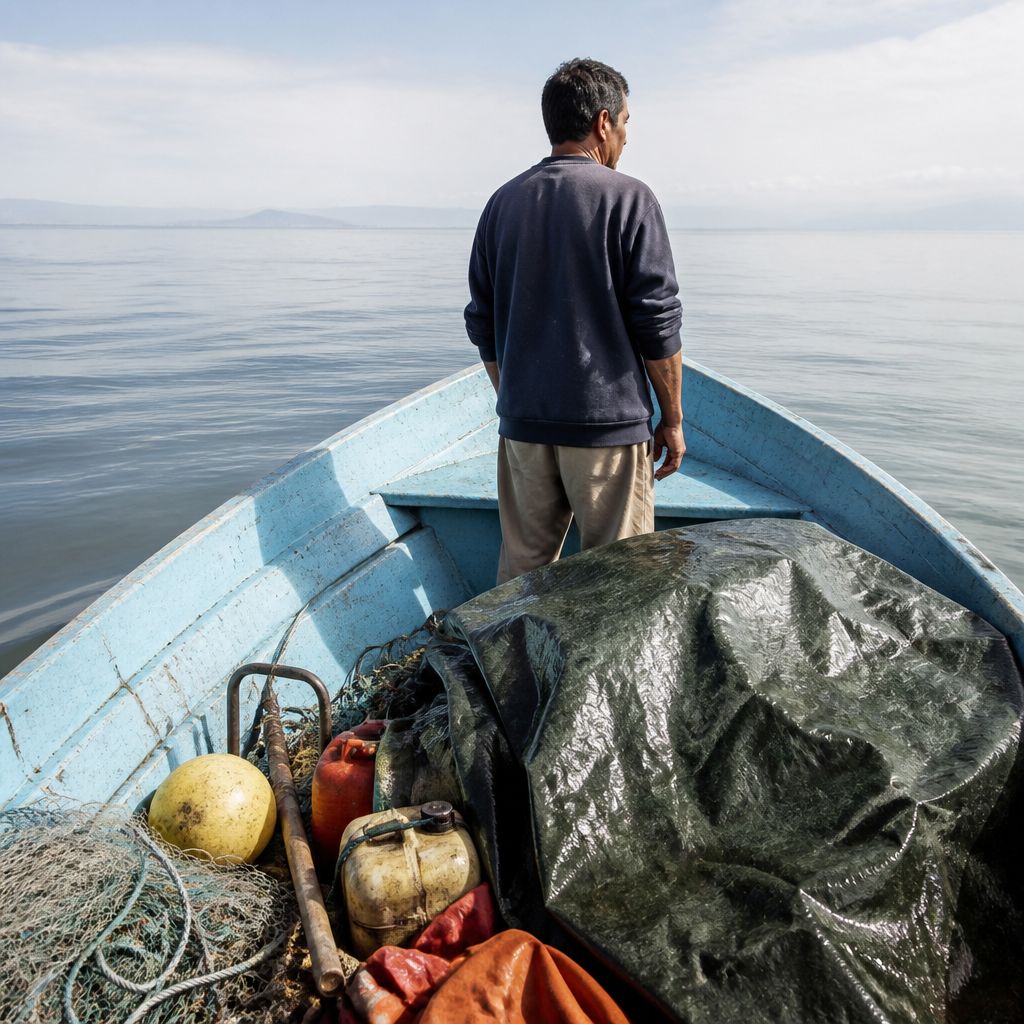
The shore was just a thin gray line, a distant memory I could no longer reach. As the boat stopped moving under its own power, the ocean fell silent. The usual hum and slap of waves faded into an unnatural quiet.
The cold hung in the air, sharp and biting, as if the sea itself was holding its breath. I shivered despite the sun. The salt air tasted empty and vast, pressing against my skin like a weight. The horizon stretched endlessly, no sign of movement, no help coming.
I stood still, my eyes searching the gray line, hoping to catch a sign, any sign. But the coast melted away into the fog and distance. I was alone with the ocean’s stillness, the quiet pressing harder with every passing moment.
Night Became Another Enemy
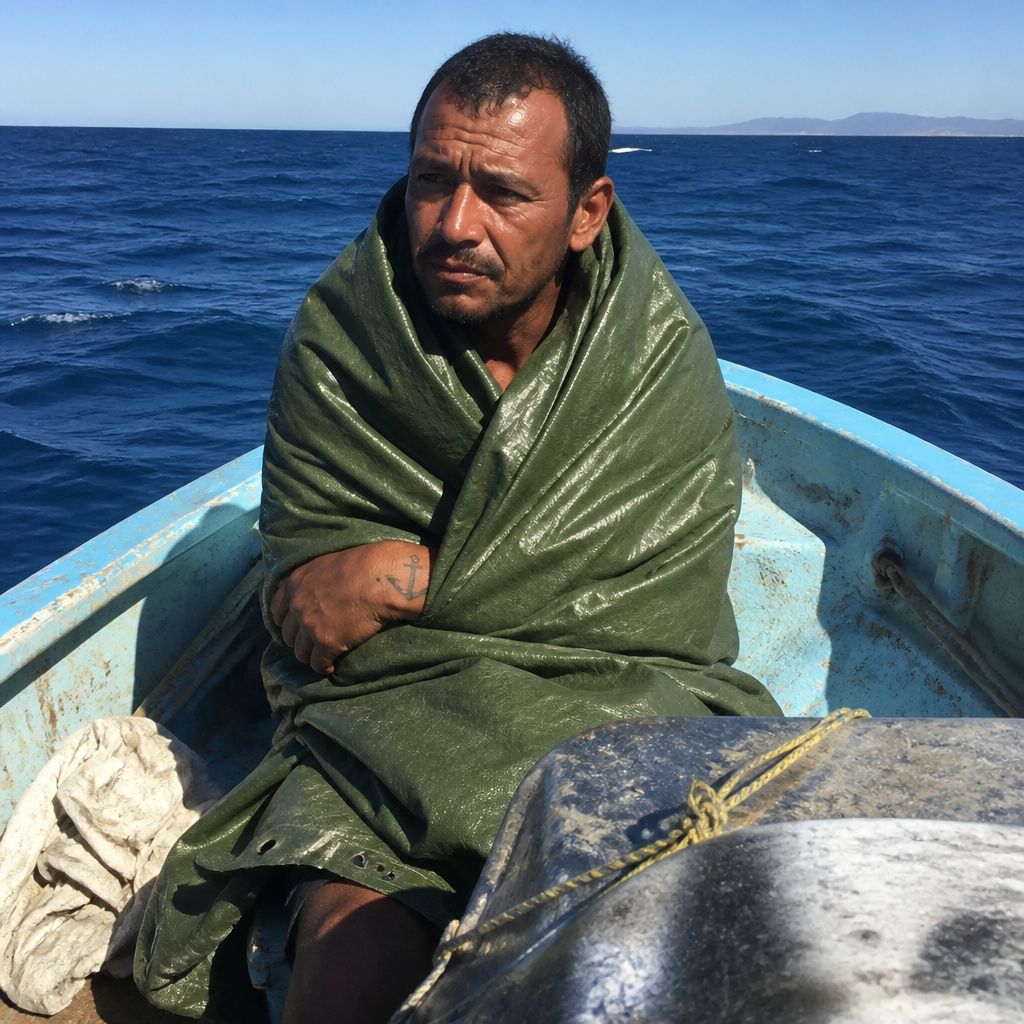
When darkness fell, the cold came creeping through the thin fiberglass hull. I wrapped myself in the only tarp left, pulling it tight against the biting chill. My teeth chattered despite my efforts, and the salt air hung heavy in my throat. The waves slapped gently against the boat, sounding like fingers tapping a door that wouldn’t open no matter how hard I knocked. I tried to will the night away, but it had turned into its own kind of enemy—quiet, cold, and relentless.
The wind shifted, carrying a dampness that seeped into my bones. My hands were numb as I folded the tarp tighter, trying to hold onto any warmth left in my skin. I listened to each wave, hoping for a sound that wasn’t just the ocean’s endless rhythm. In the stillness, every noise felt too loud, like a warning.
Sleep was a distant hope. My eyes flickered shut only to snap open again, the cold pressing down like a weight. I lay there, the tarp tangled around me, wondering how much longer I could hold out against the night’s slow assault.
A Freighter Passed Too Close
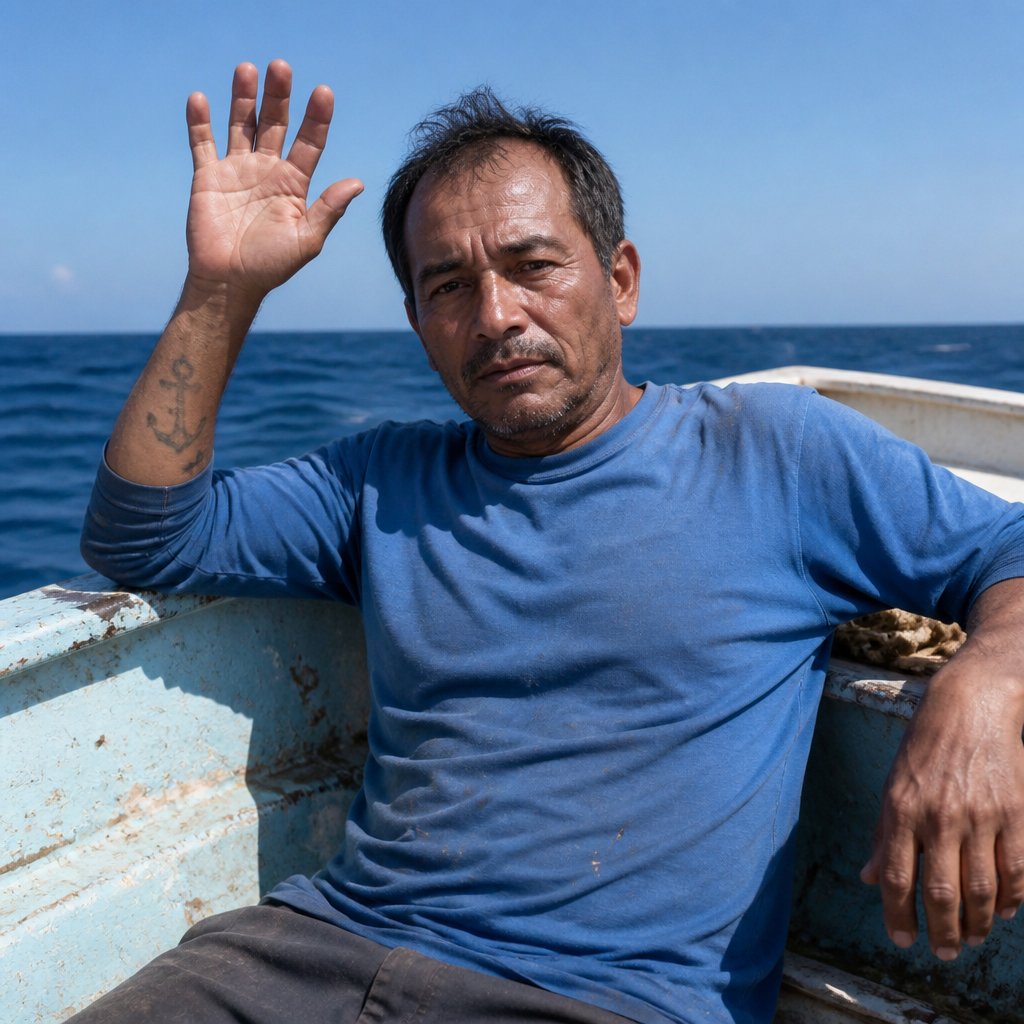
Late into the night, I caught sight of a freighter’s lights sliding slowly across the horizon. The faint hum of its engines reached me, a low, steady vibration through the water and into my bones. It was so close I thought I might catch their attention.
I raised my arm weakly, waving as best I could, but my strength was fading fast. My fingers barely moved before cramping, and the cold made every movement a struggle. The ship’s lights grew dimmer as it passed, the hum fading into silence like a ghost slipping away. I wanted to shout, but the salt in my throat stole my voice.
As the freighter disappeared into the night, a pang of loneliness hit me harder. That brief connection was gone, leaving me again with the endless dark and the cold that wouldn’t stop. I wondered if anyone had seen me at all.
Futile Signals In Daylight
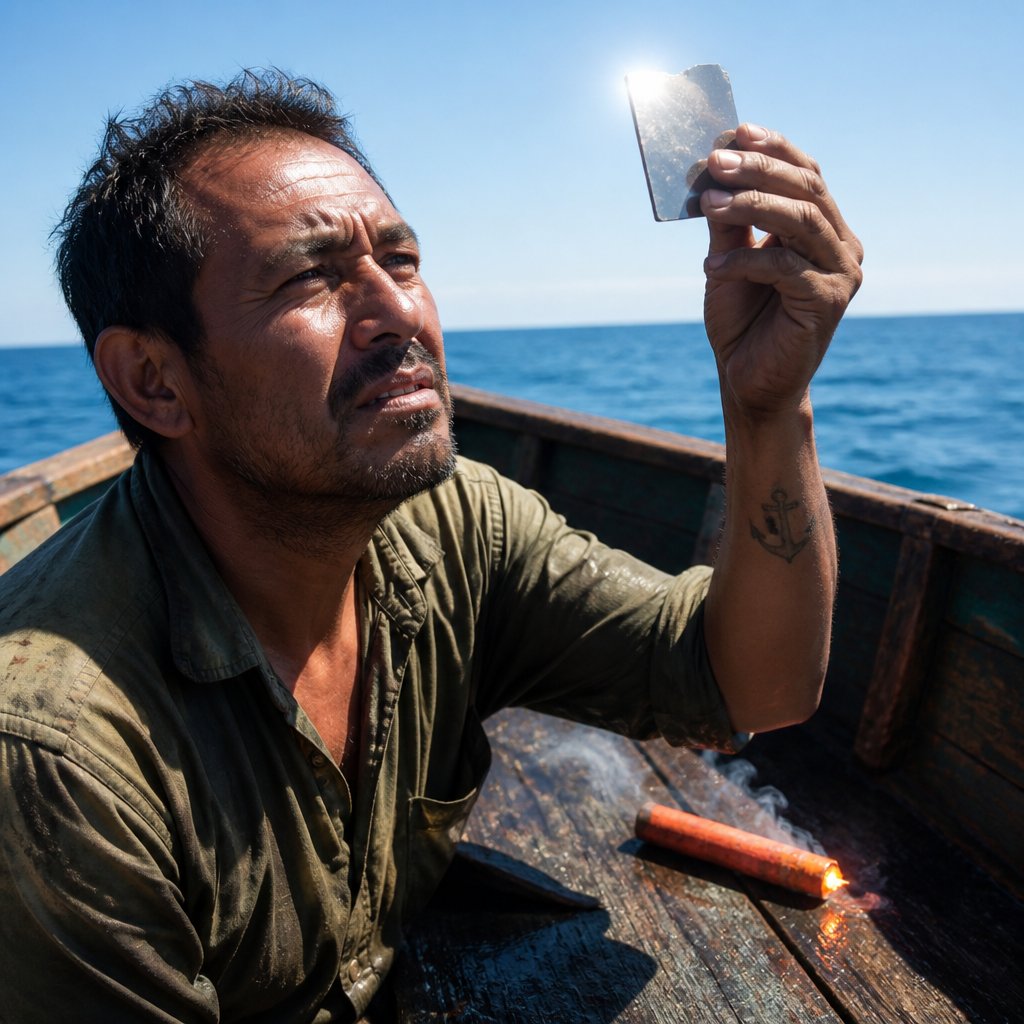
When first light came, I tried whatever I could to signal for help. I caught a glimpse of the sun’s reflection and flashed my mirror toward the sky. The bright glints felt like small screams for attention, but nothing answered back.
Later, I lit an emergency flare. The orange flare hissed and burned fiercely, smoke filling the salty air. I’d fired it too early—my hands trembled, and I wasn’t sure if anyone had noticed the signal. The flare burned out quickly, leaving only silence and the endless blue around me.
Despite my hope, the ocean remained empty. The mirror’s shine and the flare’s glow were swallowed by the vastness. I sat on the edge of the boat, heart pounding, wondering if my efforts were enough or just desperate gestures into the void.
Body Began To Fail Quietly
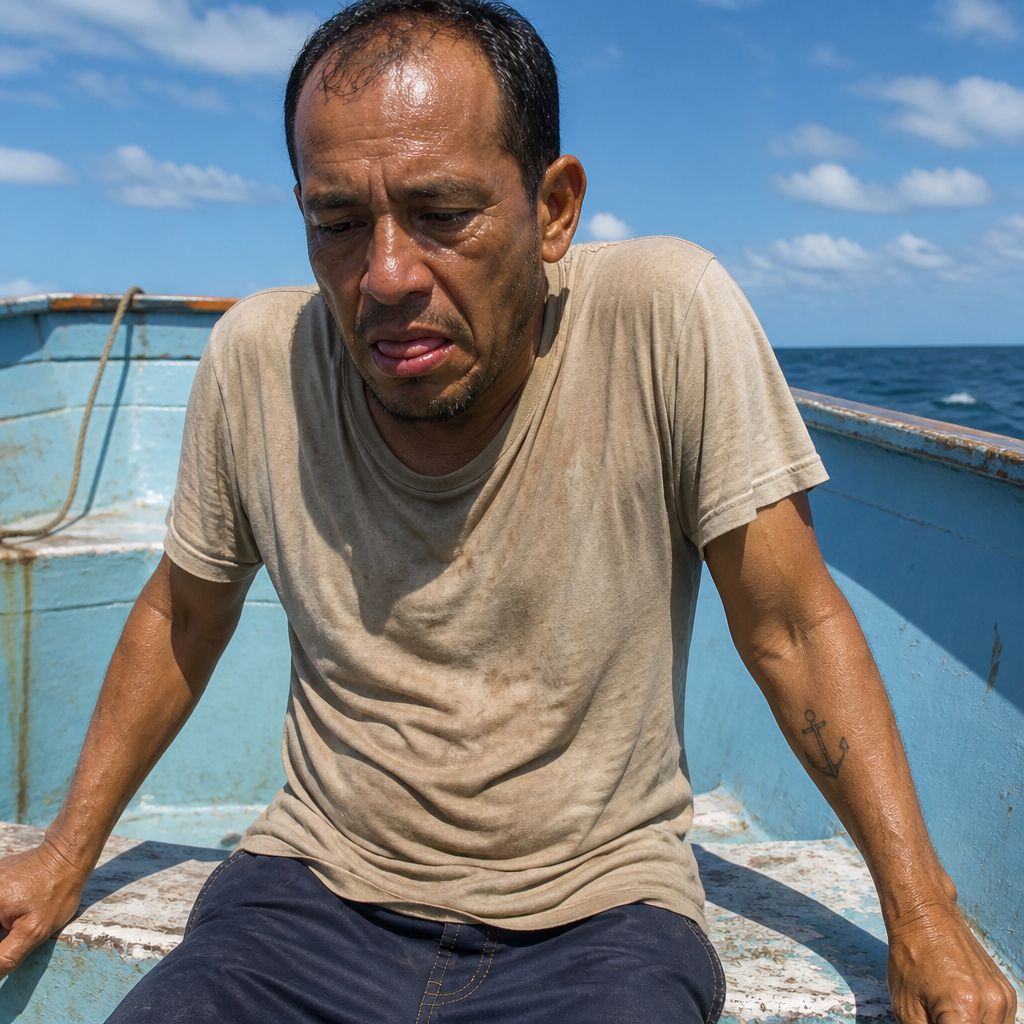
By the twelfth day, my body started to betray me. My tongue thickened and swelled, making every word a struggle to form. My urine turned dark, a deep amber that scared me more than anything. I knew I needed water desperately, but fresh water was gone.
I took tiny sips of seawater, hoping against sense that it might quench some part of the burning inside. Each time, the salt stung my throat, and I ended up vomiting until my stomach was empty. The dry heaves left me weak and trembling, but I had no other choice.
Each moment became a test between pain and survival. The sun beat down mercilessly, and the cold nights bit with equal cruelty. The boat creaked beneath me, and I was barely holding on, wondering how much longer my body would keep going.
Survival Became Stillness
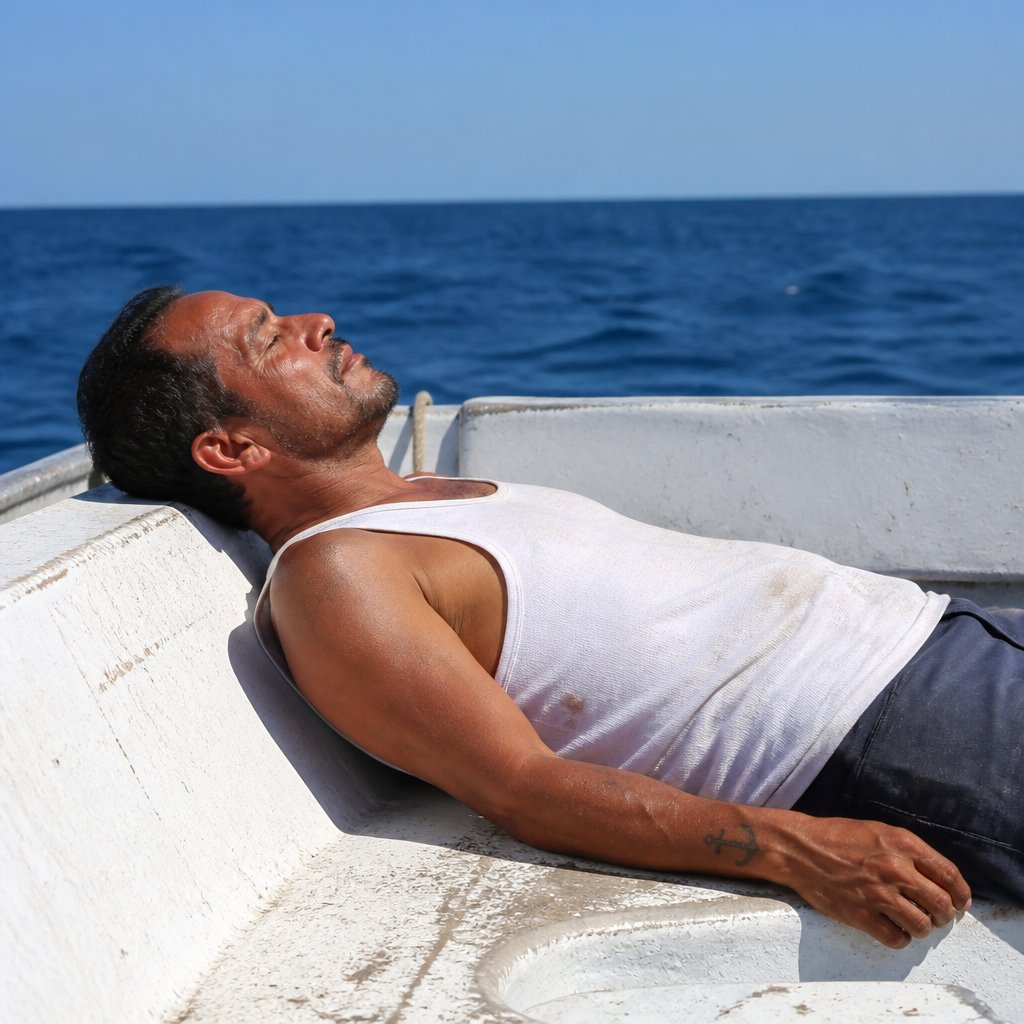
I changed my strategy. Instead of fighting the ocean, I decided to do as little as possible. I lay still in the boat, moving only when necessary to fish, drink, or bail water out from the gathering spray.
Each movement cost sweat, and sweat was something I couldn’t afford to lose. Stillness became a way of survival. I learned to breathe slow and shallow, keeping my body cool and quiet. The sun warmed my skin without burning, and the boat floated like a fragile shell beneath me.
Even the small tasks felt monumental, but they kept me alive. Every day I counted the moments between the motions, trying to conserve what little strength I had left. The ocean was a vast prison, and stillness was my only weapon.
Salt Cracks Open My Skin
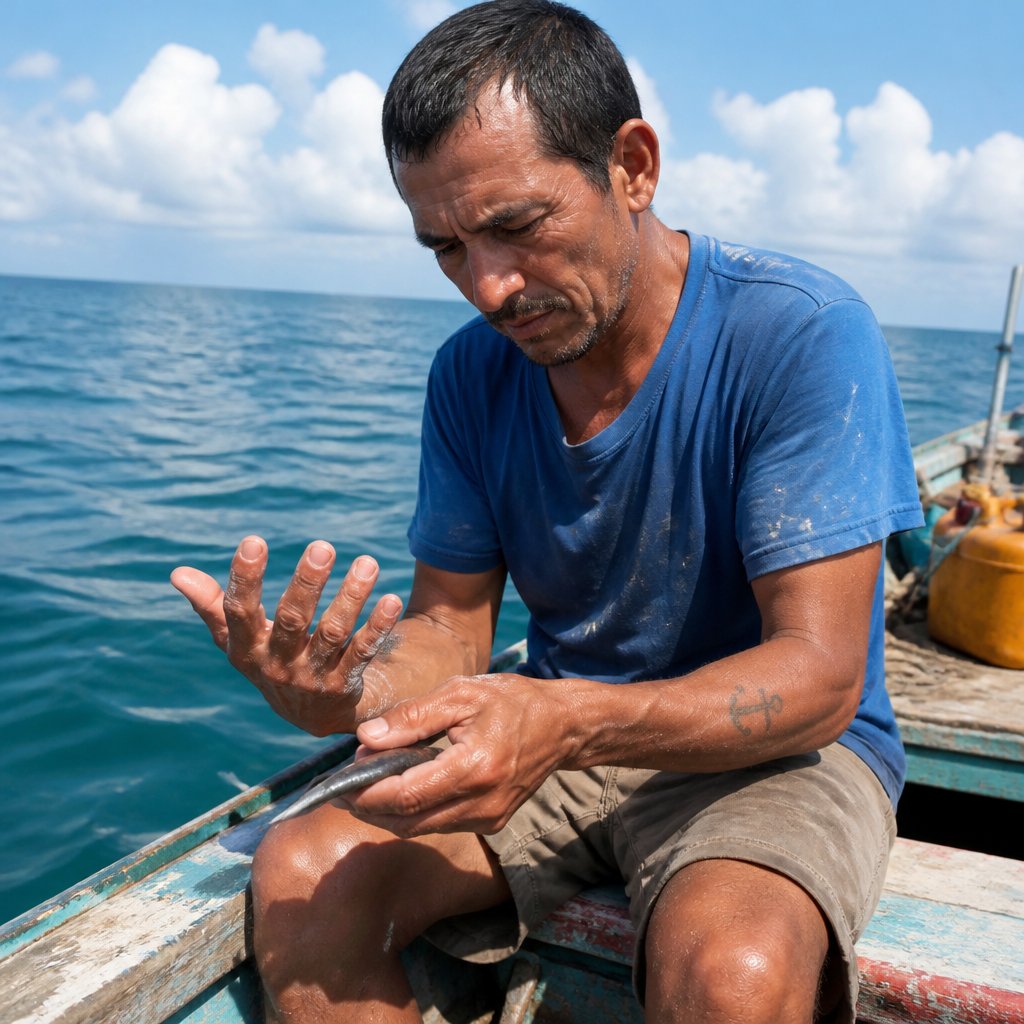
My hands swelled until the skin felt taught, stretched thin like old leather left out in the sun. Every time I curled my fingers, salt ground into those small cracks, stabbing with sharp edges. The pain was constant, a raw ache I couldn't ignore.
I started looking closely at the fish I caught. The eyes were still moist, and I began saving them, pressing them to my lips now and then. The little bit of moisture helped soothe the dryness on my lips and around the splits in my fingers.
Salt was everywhere—the taste in my throat, the grit under my nails. The sea never stopped reminding me it was in control. I couldn’t tell if the pain was from the sun, the salt, or my body giving up. I just knew I had to keep moving.
Storm Traps Me Under Tarp
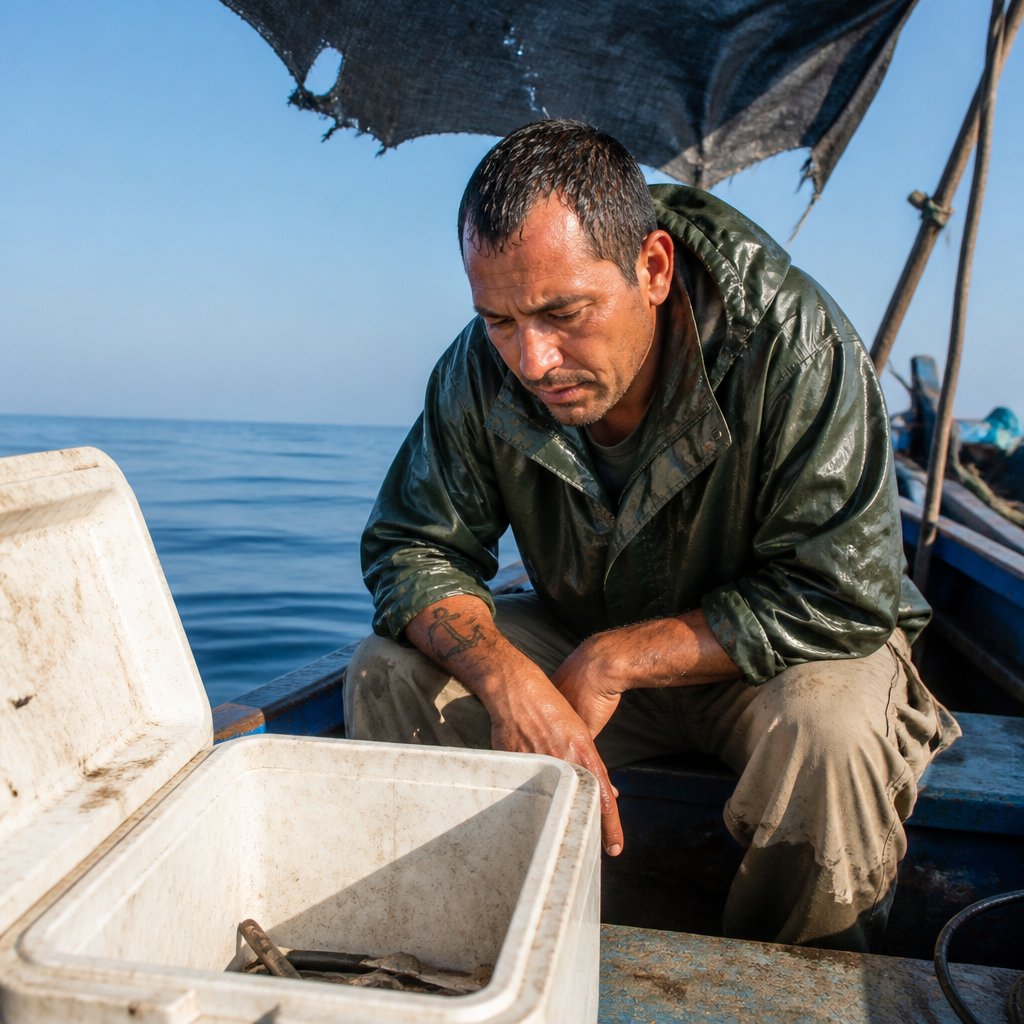
A storm came rolling in, heavy and relentless. The wind howled and the waves slapped against the hull so hard the boat shook. I pulled the tarp tight over the boat's frame and crawled underneath, trying to stay dry and out of the whipping rain.
For two days, I barely moved, pinned under the thin cover with the cold seeping through my clothes. When finally the storm passed, I crawled out and looked toward the cooler. The lid was floating open, and inside, the last of my food was gone—washed away or spoiled.
My stomach twisted with hunger, but the sea was calm again. I had to figure out what to do next, with nothing left but what I could catch or find. The wind whispered through the empty boat, and I wondered how long I could hold on.
Aircraft Passes, I Scream
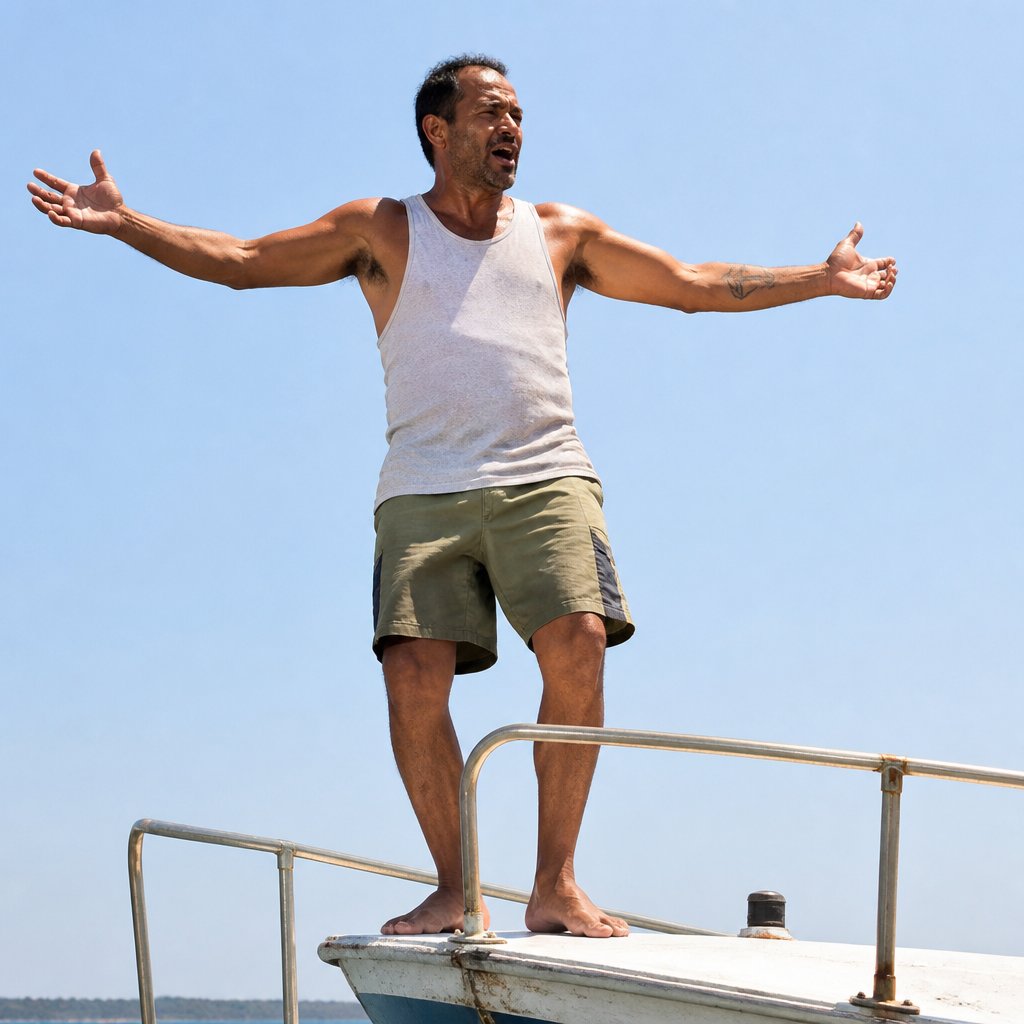
It was day 39. My ears caught the faint roar of an aircraft above, but the sky held no shape I could spot. I climbed to the highest point of the stern and shouted out loud, my voice raw and shaking.
I screamed until my throat burned and tasted like blood. No reply came, no change in the steady hum overhead. The sound was just a noise, not a rescue signal. I realized suddenly that sound alone wouldn’t save me here.
My lungs ached with the effort, and the salt in my mouth mixed with the dryness in my throat. The sun glared down, indifferent, while I stared skyward, desperate and empty-handed. Something had to change, or I wouldn't last much longer.
I Made A Flag From Orange Scoop
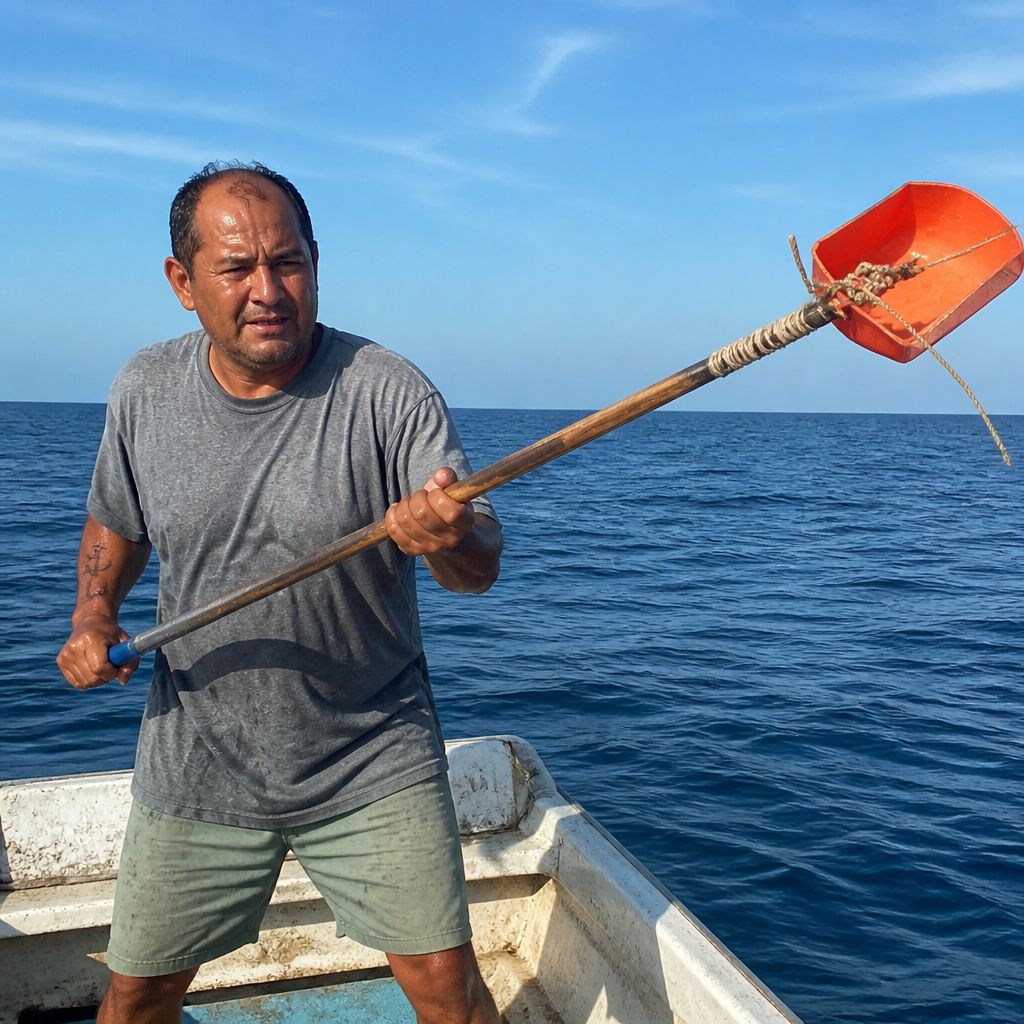
I needed something bright, something that moved and caught the eye. I tore the orange bait scoop from the side of the boat and tied it to the broken gaff, turning it into a makeshift flag I could wave.
Holding the pole above my head, I practiced waving it side to side, imagining a rescue ship spotting it from far away. The bright orange stood out against the blue sea and sky, a small beacon of hope.
My arms ached quickly from the motion, but I forced myself to keep moving the flag, knowing stillness had almost killed me. This was a new plan. I had to keep trying.
Ship Looms Like Low Wall
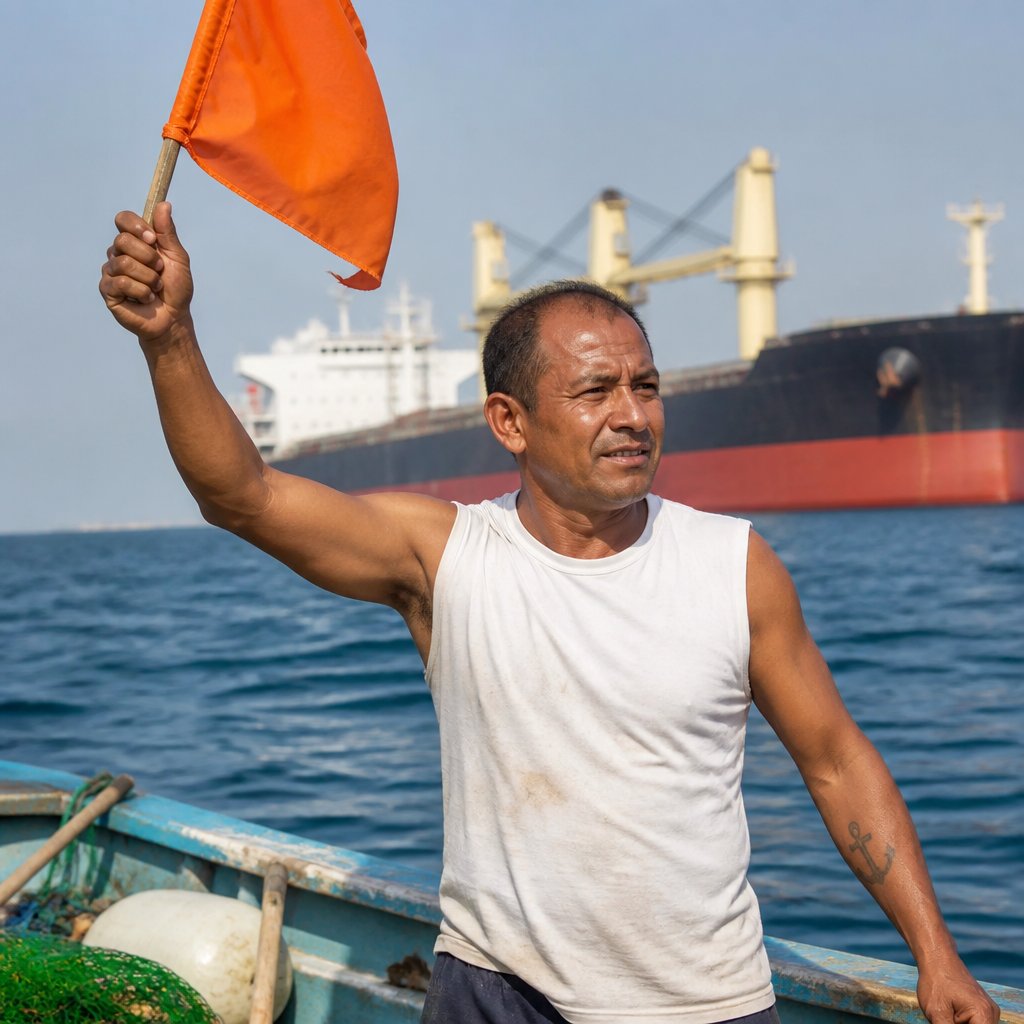
On day 47, the horizon finally broke. A container ship appeared, a massive low wall moving slowly toward me. I staggered to my feet, legs shaky like they might give out beneath me.
With every ounce of strength left, I lifted the orange flag and whipped it back and forth. My shoulder burned from the effort, sweat stinging my eyes as I kept the flag moving without pause.
The huge ship drew closer, its shadow swallowing the sun for a moment. I wasn’t sure if they’d seen me yet, but I couldn’t stop. Not now.
Light Blinks From Ship Bridge
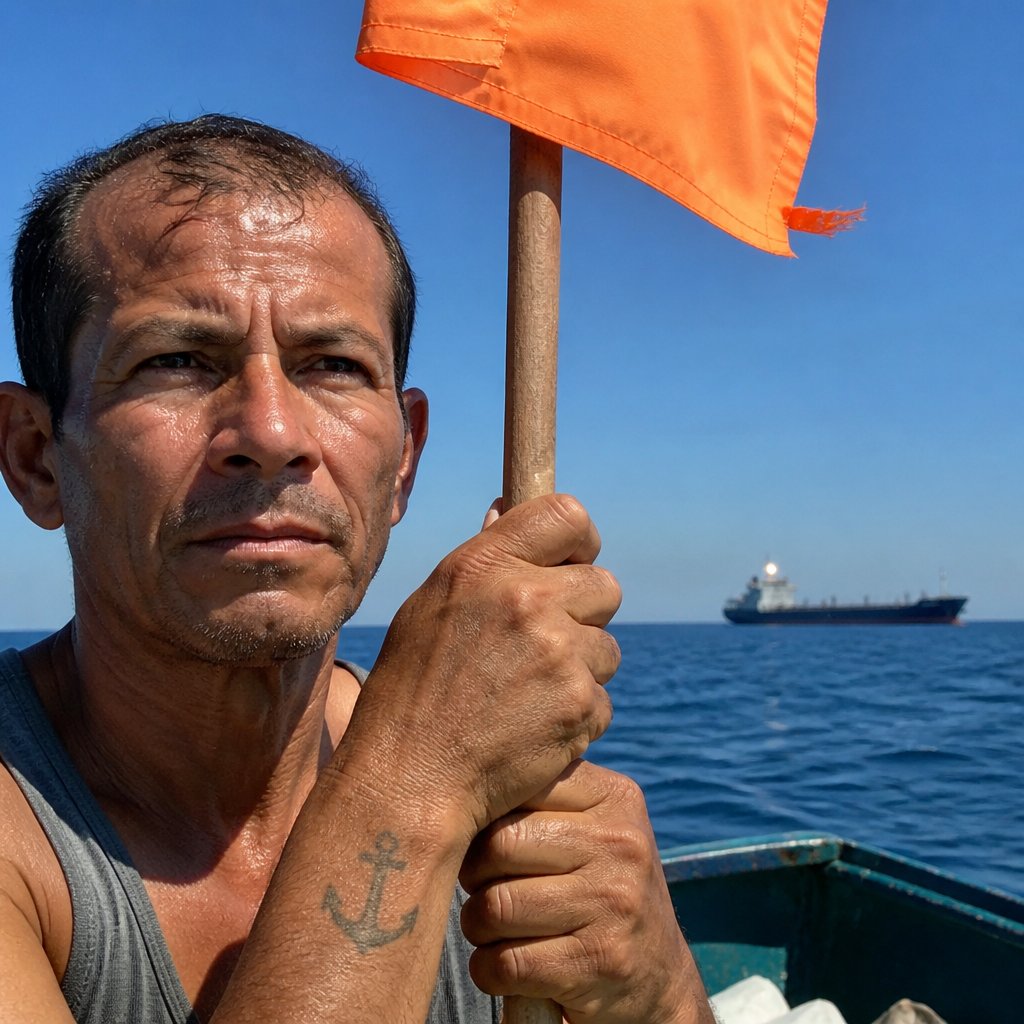
Suddenly, a tiny white light blinked back at me from the ship's bridge. It was faint but unmistakable, like a distant eye focusing on me through binoculars.
My heart pounded in my chest. After so long, someone was finally looking my way. Relief mixed with disbelief as I waved the flag harder, trying to keep the light's attention.
My breath hitched, the salt taste sharp in my mouth, but for the first time in weeks, I felt hope rising. Rescue was close, but the ship was still too far to reach.
Crew Hauls Me Up, Legs Fail
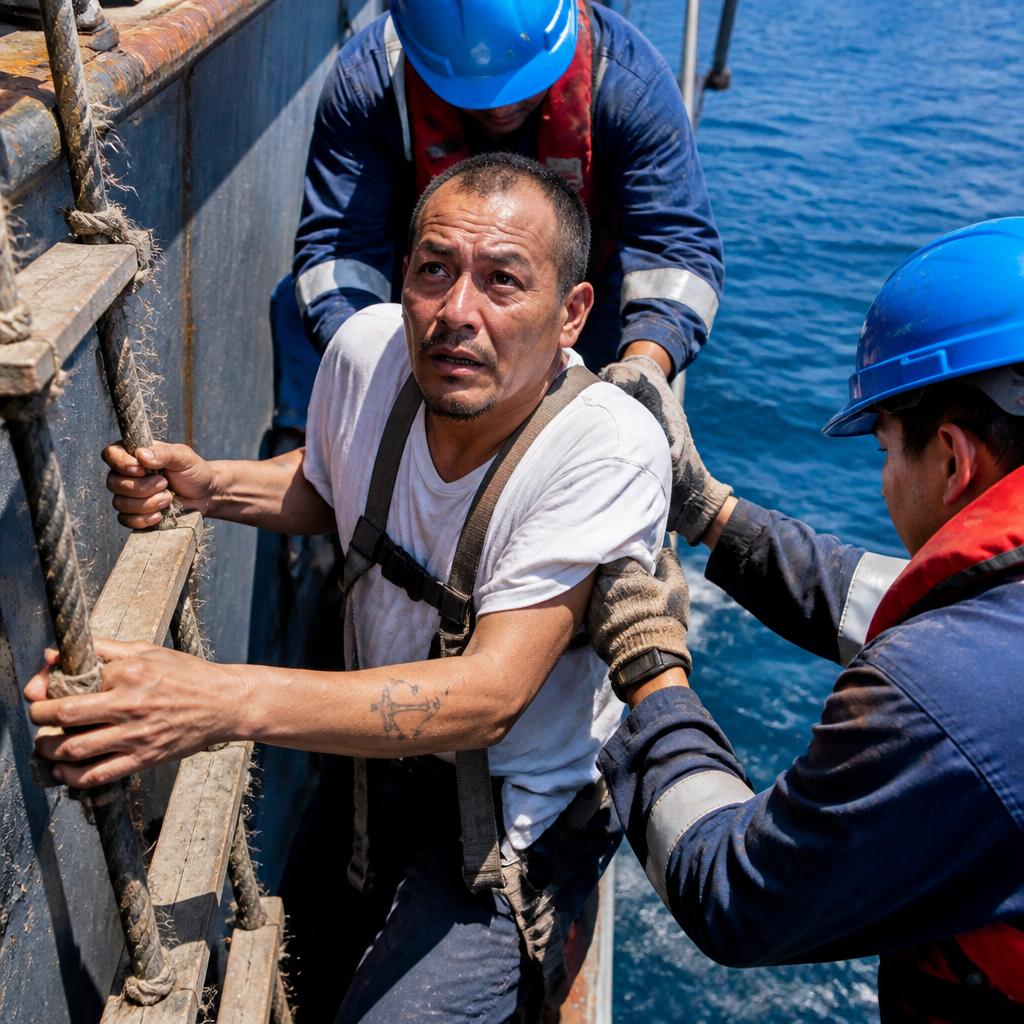
They dropped a pilot ladder over the side, but when I tried to step onto it, my legs wouldn’t hold. They trembled and gave way beneath me. Two crew members in helmets clipped me into a harness and hauled me up slowly.
The climb was a blur — salt spray, rough canvas gloves gripping mine, the creak of metal. When I finally stood on the ship’s deck, my body screamed for rest, but all I could do was ask myself if I was really safe now.
The open sea stretched behind me, the sun dipping low. My heart still raced, and I wasn’t sure if the nightmare was over or just changing shape.
How did you survive 47 days stranded at sea alone?